Certificate of completion
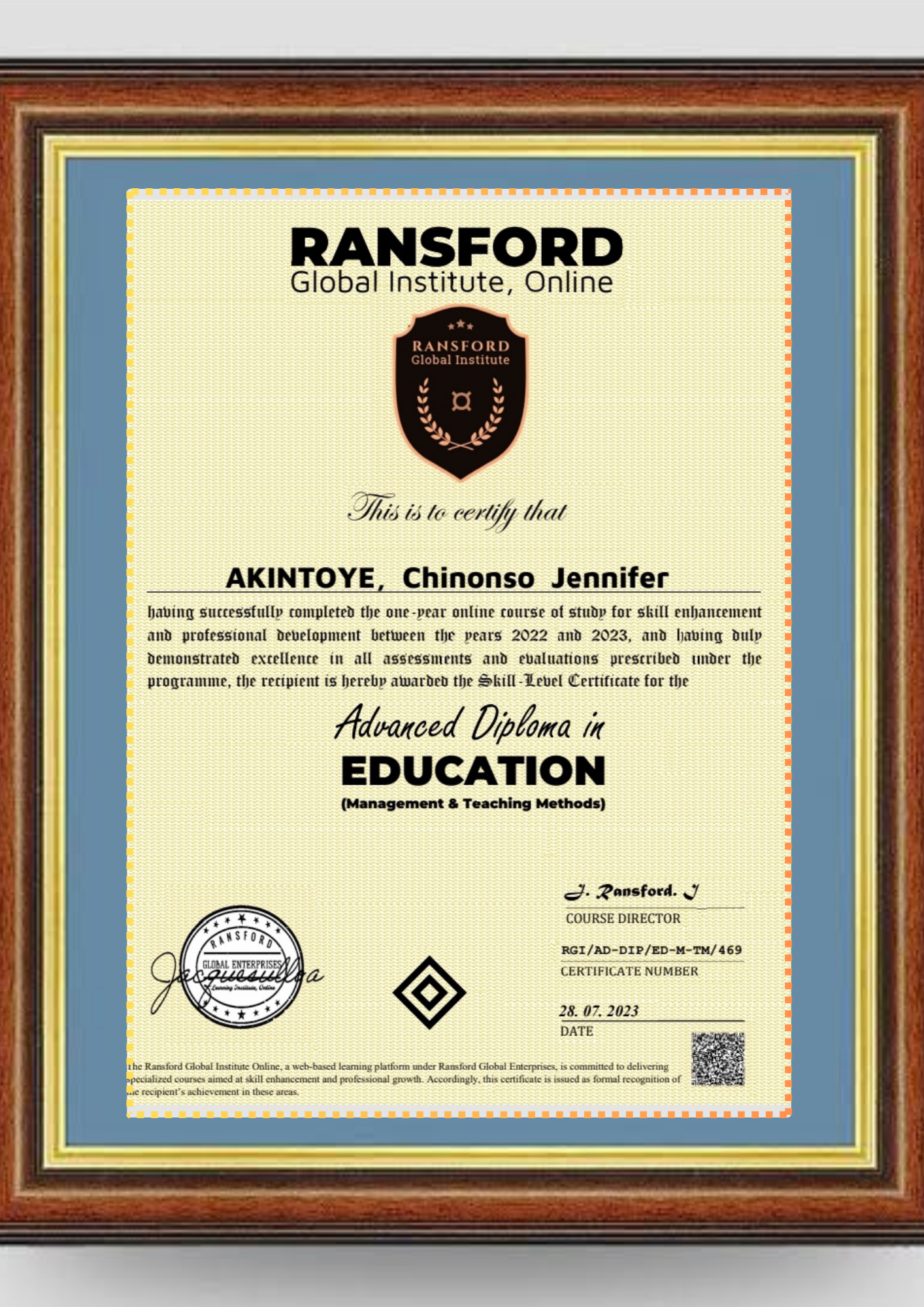
Upon successful completion of this program, you will be awarded a certificate, like the one below, standing as evidence for the knowledge gained and as an indispensable asset for showing your commitment to life long learning in your career portfolio.
1.1
Introduction to Educational Philosophies

Educational philosophies provide a framework for understanding the purpose, nature, and methods of education. They offer diverse perspectives on how knowledge should be acquired, how learners should be guided, and how education impacts individuals and society. Throughout history, various educational philosophies have emerged, reflecting different beliefs about human nature, the role of the teacher, the curriculum, and the goals of education. These philosophies serve as guiding principles for educators, policymakers, and institutions, influencing teaching practices, curriculum design, and educational systems.
1. Idealism
Idealism emphasizes the development of the mind, the pursuit of knowledge, and the cultivation of intellectual and moral virtues. According to idealist philosophers like Plato, education should focus on developing the individual’s potential by fostering reasoning, critical thinking, and the pursuit of truth. The teacher is seen as a guide who helps students explore timeless truths through subjects like philosophy, literature, and the arts. Idealism values the cultivation of the intellect and character, aiming to prepare individuals for higher thinking and ethical living. Example: A literature teacher uses classic texts like Shakespeare’s Hamlet to engage students in philosophical discussions about morality, truth, and justice. Case: In a philosophy class, students debate abstract questions like "What is the meaning of life?" and explore theories of great thinkers such as Socrates and Plato, fostering critical thinking and intellectual growth. Idealism in Higher Education: A university philosophy course focuses on the works of Immanuel Kant, engaging students in debates about ethics and morality.
2. Realism
Realism focuses on objective knowledge and the study of the natural and physical world. Realist philosophers, such as Aristotle, emphasize empirical evidence and the importance of learning through observation and experience. Education, in this view, should prioritize subjects such as mathematics, science, and logic, which are based on observable, measurable phenomena. The teacher plays a more directive role, guiding students to acquire factual knowledge and develop their reasoning abilities. Realism promotes the belief that education should be grounded in the realities of the world. Example: A science teacher conducts experiments in a lab to teach students about chemical reactions, focusing on observable phenomena and empirical evidence.
Case: In a mathematics class, students solve real-world problems such as calculating the area of a field or designing a budget, reinforcing logical and practical thinking. Realism in Vocational Training: Engineering students participate in workshops to build and test mechanical prototypes, emphasizing practical skills and empirical knowledge.
3. Pragmatism
Pragmatism, founded by philosophers like John Dewey, emphasizes learning through experience and the application of knowledge to solve real-world problems. According to pragmatist philosophy, education should be student-centered, focusing on the needs and interests of the learner. The teacher acts as a facilitator, guiding students through active inquiry, exploration, and experimentation. Pragmatism advocates for a curriculum that is flexible and adaptable, integrating science, technology, and the arts to promote critical thinking, creativity, and problem-solving. Example: A project-based learning environment where students design a water filtration system to address local community needs, integrating knowledge from science, engineering, and social studies. Case: Students in a business class create and run a mock company, making decisions about product design, marketing, and finance, learning through hands-on experience. Pragmatism in Problem-Solving Education: High school students tackle a community issue, such as recycling, by designing and implementing solutions in an environmental science class.
4. Existentialism
Existentialist philosophers, such as Jean-Paul Sartre and Søren Kierkegaard, emphasize individual freedom, personal responsibility, and the search for meaning in life. Existentialism views education as a journey of self-discovery, where students must explore their own values, beliefs, and identity. The teacher acts more as a mentor or guide, helping students navigate their personal development. In this philosophy, education aims to cultivate autonomy, self-awareness, and the ability to make meaningful choices, fostering individuality and self-expression. Example: A high school art teacher allows students to choose their projects, encouraging self-expression through painting, sculpture, or digital media. Case: In a personal development course, students write reflective journals exploring their goals, values, and identity, fostering self-awareness and individuality. Existentialism in Arts Education: A photography class encourages students to capture images that reflect their personal experiences and emotions, fostering individual expression.
5. Behaviorism
Behaviorism, developed by theorists like B.F. Skinner, focuses on observable behaviors and the influence of external stimuli on learning. According to behaviorist philosophy, learning is the result of conditioning through reinforcement and punishment. Education, in this framework, is seen as a process of shaping behavior through rewards and consequences. The teacher plays a key role in designing structured learning environments, providing feedback, and reinforcing desired behaviors to promote skill acquisition. Example: A language teacher uses flashcards and provides immediate positive reinforcement, such as praise or points, for correct vocabulary identification. Case: In a classroom management system, students earn rewards like extra playtime or certificates for consistently completing homework and following class rules. Behaviorism in Early Childhood Education: A kindergarten teacher uses a reward chart to encourage positive behaviors such as sharing and following instructions.
6. Cognitivism
Cognitivist philosophy, influenced by psychologists such as Jean Piaget, emphasizes the role of internal mental processes such as memory, attention, perception, and problem-solving. According to cognitivists, learning involves the active processing of information, with learners constructing meaning based on their prior knowledge and experiences. Education should focus on helping students develop critical thinking and problem-solving skills. Teachers are viewed as facilitators who encourage exploration, reflection, and the organization of knowledge. Example: A history teacher uses timelines, mind maps, and storytelling to help students organize and retain information about historical events. Case: A math instructor introduces scaffolding techniques, breaking down complex problems into smaller, manageable steps, helping students gradually develop problem-solving skills. Cognitivism in STEM Education: An online coding platform provides interactive tutorials, quizzes, and real-time feedback to help students learn programming concepts step by step.
7. Constructivism
Constructivism, rooted in the work of theorists like Lev Vygotsky and Jean Piaget, posits that learners actively construct their understanding and knowledge through experiences. In this philosophy, education is viewed as a process of meaning-making, where learners build on their existing knowledge through exploration, interaction, and reflection. The teacher serves as a guide, providing scaffolding and support, but allowing students to explore, question, and discover their own understanding. Example: Students collaborate on a science project to design a model of a sustainable city, actively constructing their understanding through exploration and teamwork. Case: In a social studies class, students simulate a United Nations assembly, researching and representing different countries to debate global issues, constructing knowledge through interaction and role-play. Constructivism in Language Learning: Students participate in immersive role-play activities, such as running a mock restaurant, to practice language skills in realistic contexts.
8. Humanism
Humanist philosophy, represented by thinkers like Carl Rogers and Abraham Maslow, emphasizes the inherent potential of individuals and their desire for self-actualization. Humanist education focuses on nurturing the whole person—emotional, intellectual, and social—rather than simply transmitting knowledge. It views the learner as central to the educational process, advocating for personalized learning experiences, autonomy, and the development of individual potential. The teacher acts as a facilitator who supports students’ personal growth and self-realization. Example: A teacher incorporates students’ interests into the curriculum, such as allowing a student passionate about space exploration to create a presentation on NASA missions. Case: A guidance counselor facilitates group discussions where students openly share their feelings and challenges, promoting emotional well-being and personal growth. Humanism in Inclusive Education: A classroom celebrates diversity by encouraging students to share their cultural traditions and fostering an environment of mutual respect and understanding.
Conclusion
Educational philosophies play a vital role in shaping the aims, methods, and structures of education. By examining the diverse perspectives of idealism, realism, pragmatism, existentialism, behaviorism, cognitivism, constructivism, and humanism, educators can better understand the principles that guide teaching and learning practices. These philosophies help frame the goals of education, influencing curriculum design, teaching methods, and the role of both the teacher and the learner. Understanding these foundational philosophies is essential for educators seeking to foster effective and meaningful learning experiences in a diverse and ever-changing world and by integrating them into practical scenarios, educators can create dynamic, effective, and meaningful learning experiences tailored to diverse needs and contexts.
MODULE 1.2:
Historical Evolution of Education Systems
The historical evolution of education systems illustrates humanity's ongoing pursuit of knowledge, skills, and societal development. Education has transitioned from informal learning within families and communities to formal institutions designed to serve diverse social, economic, and cultural needs. Each stage reflects the values and priorities of its time, showcasing the dynamic relationship between education and society.
-
Ancient Education Systems
Education in ancient times was primarily informal, rooted in survival and cultural preservation.
-
Prehistoric Societies: Learning was transmitted orally through stories, observation, and imitation, focusing on survival skills like hunting and farming.
-
Mesopotamia and Egypt: Early civilizations formalized education, teaching skills like writing (e.g., cuneiform in Mesopotamia) and religious studies (e.g., temple schools in Egypt).
-
China and India: Education emphasized moral development, as seen in Confucian principles in China and the gurukul system in India, which combined spiritual and academic learning.
-
-
Classical Education Systems
The classical period saw the emergence of structured education aimed at intellectual and societal advancement.
-
Greece: Athenian education prioritized intellectual pursuits, with philosophers like Socrates and Aristotle shaping critical thinking and rhetoric, while Sparta focused on physical training and discipline.
-
Rome: Roman education adapted Greek models, emphasizing practical knowledge for governance, engineering, and law, leading to the development of the liberal arts curriculum.
-
-
Medieval Education Systems
During the Middle Ages, education was closely linked to religion and the Church.
-
Monastic and Cathedral Schools: Monasteries preserved classical knowledge and taught religious and academic subjects, while cathedral schools laid the groundwork for modern universities.
-
Islamic Golden Age: Madrasas in the Islamic world combined religious and secular education, advancing fields like medicine, mathematics, and philosophy.
-
Feudal Education: Knights received specialized training in warfare and chivalry, reflecting the hierarchical nature of feudal societies.
-
-
Renaissance and Enlightenment Education Systems
The Renaissance and Enlightenment periods brought a renewed focus on humanism, reason, and scientific inquiry.
-
Renaissance: This era revived classical learning and emphasized the arts, sciences, and individual potential, facilitated by the invention of the printing press, which democratized access to knowledge.
-
Enlightenment: Thinkers like John Locke and Rousseau advocated education reform, promoting natural development, individual rights, and rational thinking, influencing the structure of formal education.
-
-
Industrial and Modern Education Systems
The Industrial Revolution and the 20th century transformed education to meet the needs of industrialized societies.
-
Mass Education: Public schooling systems emerged to provide universal literacy and basic education, fostering an informed workforce.
-
Technical and Vocational Training: Education adapted to industrial demands by introducing specialized training programs for technical jobs.
-
Higher Education: Universities expanded, becoming hubs for research, innovation, and professional development.
-
-
Contemporary Education Systems
Modern education systems address global challenges and leverage technological advancements to enhance learning.
-
Globalization and Technology: Digital tools and online learning platforms have increased access to education, promoting cross-cultural exchange and global citizenship.
-
Inclusivity and Equity: Efforts like the United Nations' Sustainable Development Goal 4 aim to reduce disparities in education and ensure quality learning for all.
-
Lifelong Learning: Emphasis is placed on continuous learning through formal, non-formal, and informal education to adapt to rapidly changing knowledge and skill demands.
-
Conclusion
The evolution of education systems reflects humanity’s adaptive response to changing social, cultural, and technological landscapes. Understanding this history provides valuable insights into how education can address current challenges while preparing learners for an unpredictable future.
MODULE 1.3:
Modern Educational Theories
Modern educational theories offer diverse frameworks for understanding how people learn, the role of educators, and the design of effective educational systems. These theories build on historical and classical foundations, integrating insights from psychology, sociology, and neuroscience to create learning experiences that are dynamic, inclusive, and aligned with contemporary societal needs. The following sections explore key modern educational theories, highlighting their principles, applications, and practical examples.
1. Constructivism
Constructivism asserts that learners construct their own understanding and knowledge through experiences and interactions. Rather than passively receiving information, students actively engage with concepts, experiment, and reflect on their learning.
-
Principles: Learning is student-centered, experiential, and driven by inquiry and collaboration. Educators facilitate learning by providing guidance, resources, and real-world contexts.
-
Applications: Constructivist classrooms encourage group projects, problem-solving activities, and hands-on learning.
-
Example: In a science class, students may design experiments to explore principles of gravity rather than merely memorizing formulas. By conducting the experiment, observing results, and discussing findings, they actively construct their understanding.
-
Case Study: Finland’s education system emphasizes constructivist approaches, focusing on interdisciplinary projects and student-led learning, resulting in consistently high international rankings for educational outcomes.
2. Behaviorism
Behaviorism focuses on observable behaviors and emphasizes the role of external stimuli and reinforcement in shaping learning. It is based on the idea that learning occurs through conditioning.
-
Principles: Positive reinforcement strengthens desired behaviors, while negative reinforcement reduces unwanted ones. The environment plays a crucial role in shaping learning outcomes.
-
Applications: Behaviorism is widely used in skill-based training, where repetition and reinforcement are key.
-
Example: A language app like Duolingo uses behaviorist principles by providing immediate feedback and rewards (e.g., points or badges) for correct answers, encouraging continued learning.
-
Case Study: In a corporate training program, employees learn customer service skills through role-playing exercises. Positive reinforcement, such as recognition or rewards for effective interactions, motivates participants to adopt desired behaviors.
3. Cognitivism
Cognitivism focuses on internal mental processes such as thinking, memory, and problem-solving. It emphasizes understanding how information is processed, stored, and retrieved.
-
Principles: Learning involves acquiring and organizing knowledge in meaningful ways. Educators use scaffolding to support students in building on prior knowledge.
-
Applications: Cognitivist approaches include concept mapping, chunking information, and encouraging metacognitive strategies.
-
Example: A teacher uses visual aids and diagrams to help students understand the water cycle, enabling them to connect abstract concepts to visual representations.
-
Case Study: Singapore’s math curriculum incorporates cognitivist principles by teaching problem-solving strategies and encouraging deep understanding of mathematical concepts, leading to high student performance internationally.
4. Humanism
Humanism views education as a means of personal growth and self-actualization, focusing on the learner’s emotional, social, and intellectual needs.
-
Principles: Education should develop the whole person, emphasizing empathy, creativity, and intrinsic motivation. Educators act as facilitators who create a supportive and respectful learning environment.
-
Applications: Humanistic education fosters student autonomy, choice, and self-reflection.
-
Example: A literature class might allow students to choose books they find meaningful and engage in open-ended discussions, encouraging personal connections to the material.
-
Case Study: The Montessori method exemplifies humanistic education by emphasizing self-directed learning, hands-on activities, and respect for individual learning paces.
5. Social Learning Theory
Social learning theory highlights the importance of observing, modeling, and imitating others in the learning process. It integrates cognitive and behavioral aspects, emphasizing the role of social interactions.
-
Principles: Learning occurs through observation and imitation, influenced by role models and social context. Reinforcement and feedback also shape behaviors.
-
Applications: Collaborative projects, peer teaching, and mentorship programs are common applications.
-
Example: In a business ethics course, students watch videos of real-world ethical dilemmas and analyze the actions of leaders, learning from their successes and failures.
-
Case Study: Social learning is integral to workplace training programs where employees shadow experienced colleagues to learn job-specific skills and behaviors.
6. Multiple Intelligences Theory
Proposed by Howard Gardner, this theory posits that individuals possess different types of intelligences, such as linguistic, logical-mathematical, musical, bodily-kinesthetic, interpersonal, intrapersonal, naturalistic, and spatial.
-
Principles: Education should cater to diverse intelligences, allowing students to leverage their strengths and develop new skills.
-
Applications: Teachers design lessons that incorporate various activities, such as storytelling, experiments, music, and physical movement.
-
Example: In a history lesson, students might choose between writing a report, creating a timeline, performing a skit, or composing a song to demonstrate their understanding.
-
Case Study: Project-based learning environments, such as those in International Baccalaureate (IB) schools, integrate multiple intelligences to provide holistic education.
7. Experiential Learning
Experiential learning emphasizes learning through direct experience and reflection. It is rooted in the idea that meaningful learning occurs when learners actively engage in real-world tasks.
-
Principles: The learning cycle involves concrete experience, reflective observation, abstract conceptualization, and active experimentation.
-
Applications: Internships, service-learning, and simulation activities are examples of experiential learning.
-
Example: Medical students participate in clinical rotations to apply theoretical knowledge in real-life healthcare settings, enhancing their skills through hands-on experience.
-
Case Study: Harvard Business School’s case method encourages students to analyze real-world business scenarios, make decisions, and discuss outcomes with peers.
Conclusion
Modern educational theories provide a robust foundation for designing effective teaching and learning experiences. By integrating diverse approaches such as constructivism, behaviorism, cognitivism, and humanism, educators can address varied learning needs and prepare students for the complexities of the contemporary world. Practical applications and case studies demonstrate the transformative potential of these theories, ensuring that education remains relevant, inclusive, and impactful.
MODULE 1.4:
Theories of Learning and Development
Theories of learning and development provide a foundational understanding of how individuals acquire knowledge, develop skills, and grow cognitively, emotionally, and socially. These theories guide educators, psychologists, and policymakers in designing effective learning environments and strategies that cater to diverse learners. Below is a comprehensive discussion of key learning and development theories, their principles, applications, and practical examples.
1. Behaviorist Theory
Behaviorist theory focuses on observable behaviors and the role of environmental stimuli in shaping learning. It was pioneered by psychologists like Ivan Pavlov, John Watson, and B.F. Skinner.
-
Principles: Learning is a result of conditioning, and behavior can be shaped through reinforcement (positive or negative) and punishment.
-
Applications: Behaviorism is widely applied in classroom management, habit formation, and skill training.
-
Example: A teacher uses a reward system where students earn points for completing assignments on time. Accumulated points lead to a reward, reinforcing positive behavior.
-
Case Study: In corporate settings, behaviorist principles are applied in gamified e-learning platforms where employees receive badges and rewards for completing training modules.
2. Cognitive Development Theory (Jean Piaget)
Jean Piaget’s theory emphasizes how children construct knowledge through stages of cognitive development.
-
Principles: Learning occurs in four stages: sensorimotor, preoperational, concrete operational, and formal operational. Each stage reflects a qualitative difference in thinking abilities.
-
Applications: Teaching strategies are tailored to the cognitive level of learners.
-
Example: In a concrete operational stage (ages 7–11), students might use manipulatives like blocks to solve math problems, as they can think logically about concrete objects but struggle with abstract reasoning.
-
Case Study: Early childhood education programs like Montessori incorporate Piaget’s stages by providing age-appropriate learning materials that foster exploration and hands-on activities.
3. Social Learning Theory (Albert Bandura)
Albert Bandura’s social learning theory emphasizes the importance of observation, imitation, and modeling in learning.
-
Principles: Learning occurs by observing the behaviors of others and their consequences. Factors like attention, retention, reproduction, and motivation influence the learning process.
-
Applications: Social learning is evident in collaborative learning environments and mentorship programs.
-
Example: A student learns teamwork by participating in group projects and observing how peers interact and solve problems.
-
Case Study: In healthcare training, new nurses shadow experienced practitioners to learn clinical procedures and professional behavior, combining observation with hands-on practice.
4. Constructivist Theory (Lev Vygotsky)
Lev Vygotsky’s constructivist theory emphasizes the role of social interactions and cultural context in learning.
-
Principles: Learning is a collaborative process where knowledge is co-constructed. The "zone of proximal development" (ZPD) represents the range of tasks a learner can achieve with guidance.
-
Applications: Scaffolding techniques are used to support learners as they build understanding.
-
Example: A teacher provides hints and guidance during a challenging math problem, gradually reducing support as the student gains confidence.
-
Case Study: Collaborative projects in STEM education, where students work in teams to solve real-world problems, align with Vygotsky’s emphasis on social interaction and co-construction of knowledge.
5. Humanistic Theory (Abraham Maslow and Carl Rogers)
Humanistic theories focus on personal growth, self-actualization, and the holistic development of learners.
-
Principles: Learning is student-centered, emphasizing intrinsic motivation, empathy, and the fulfillment of potential. Maslow’s hierarchy of needs suggests that basic needs must be met for effective learning to occur.
-
Applications: Humanistic approaches are evident in project-based learning, where students pursue topics of personal interest.
-
Example: A school counselor helps students set personal goals and develop strategies to overcome challenges, fostering self-confidence and motivation.
-
Case Study: Alternative schools like Waldorf emphasize creativity, personal growth, and emotional well-being, aligning with humanistic principles.
6. Information Processing Theory
This theory likens human cognition to computer processing, focusing on how information is received, stored, and retrieved.
-
Principles: Learning involves attention, encoding, storage, and retrieval. Effective learning strategies include chunking information, repetition, and visualization.
-
Applications: Teaching methods incorporate memory aids like mnemonics and graphic organizers.
-
Example: A history teacher uses timelines and visual aids to help students organize and recall historical events.
-
Case Study: Digital tools like mind-mapping software and spaced repetition apps enhance learning by supporting the brain’s natural information processing.
7. Ecological Systems Theory (Urie Bronfenbrenner)
Bronfenbrenner’s theory highlights the interplay of environmental systems in influencing development.
-
Principles: Development is shaped by interactions within microsystems (family, school), mesosystems (connections between systems), exosystems (indirect influences), and macrosystems (cultural and societal norms).
-
Applications: Educators consider the broader context of a child’s life, including family dynamics and community resources.
-
Example: A school partners with local organizations to provide after-school programs that support students’ academic and social development.
-
Case Study: Community schools in low-income areas integrate services like health care and counseling, addressing multiple layers of influence on student learning.
Conclusion
Theories of learning and development provide valuable insights into how individuals grow and acquire knowledge. From behaviorist reinforcement strategies to constructivist collaboration and humanistic self-actualization, these theories offer diverse approaches to designing effective learning environments. Practical examples and case studies demonstrate their application, ensuring that educators and policymakers can create inclusive, supportive, and impactful educational systems.
MODULE 1.5:
Social and Cultural Influences on Education
Education is deeply embedded within the social and cultural contexts of a society. Social norms, values, traditions, and cultural practices shape educational systems, teaching methods, and learners' experiences. Understanding these influences helps educators, policymakers, and stakeholders design inclusive and effective education systems. Below is a comprehensive discussion of how social and cultural factors impact education, supported by examples and case studies.
1. Impact of Socioeconomic Status
Socioeconomic status (SES) significantly influences access to quality education, learning outcomes, and opportunities.
-
Key Factors: Families with higher SES often have better access to educational resources, including books, technology, and extracurricular activities. Conversely, low SES can lead to limited opportunities due to inadequate school funding and support systems.
-
Example: Students from affluent families might attend well-funded schools with advanced facilities, while those from economically disadvantaged backgrounds may face overcrowded classrooms and lack of resources.
-
Case Study: In the United States, the disparity between urban and suburban schools highlights how SES affects educational outcomes. Suburban schools often have better funding and resources, leading to higher test scores and graduation rates.
2. Cultural Traditions and Practices
Cultural beliefs and practices influence attitudes toward education, curriculum design, and teaching methods.
-
Key Factors: Some cultures emphasize rote memorization and discipline, while others prioritize creativity and critical thinking. Cultural norms also affect gender roles and expectations in education.
-
Example: In Japan, education emphasizes group harmony and collective success, while Western cultures often prioritize individual achievements and innovation.
-
Case Study: In some rural areas of India, traditional gender roles discourage girls from pursuing higher education. Initiatives like the "Beti Bachao, Beti Padhao" campaign aim to address this issue by promoting girls' education and challenging cultural norms.
3. Language and Communication
Language plays a vital role in education, serving as a medium for instruction and a reflection of cultural identity.
-
Key Factors: Language barriers can hinder learning, especially for students from minority or immigrant backgrounds. Multilingual education can bridge these gaps.
-
Example: In South Africa, schools offer instruction in multiple languages, reflecting the country's linguistic diversity and ensuring inclusivity.
-
Case Study: Bilingual education programs in the United States help Spanish-speaking students transition to English while preserving their cultural heritage.
4. Religion and Spiritual Beliefs
Religious values and practices shape educational content and approaches in many societies.
-
Key Factors: Religious teachings often influence moral education, discipline, and the inclusion of specific subjects. However, overly rigid religious influences can limit critical thinking.
-
Example: In Islamic countries, schools incorporate Quranic studies alongside secular subjects, blending religious and academic education.
-
Case Study: Faith-based schools in the United Kingdom provide a balanced education that includes religious instruction while adhering to national curriculum standards.
5. Social Inequality and Discrimination
Discrimination based on race, ethnicity, gender, or disability can create barriers to education.
-
Key Factors: Marginalized groups often face systemic inequalities, resulting in limited access to quality education and resources.
-
Example: Racial segregation in schools during apartheid in South Africa denied equal opportunities to Black students.
-
Case Study: Affirmative action policies in India reserve seats for students from Scheduled Castes and Scheduled Tribes, addressing historical inequalities and promoting educational equity.
6. Globalization and Cultural Exchange
Globalization has increased cultural exchange, introducing new perspectives and methods in education.
-
Key Factors: Exposure to global ideas enriches curriculum design and encourages cross-cultural understanding. However, it may also lead to the erosion of local cultures.
-
Example: International schools integrate global best practices with local traditions, preparing students for a globalized world.
-
Case Study: The International Baccalaureate (IB) program promotes global citizenship by incorporating international perspectives into its curriculum while respecting local contexts.
7. Technology and Media
Technology and media serve as powerful tools for shaping educational practices and cultural values.
-
Key Factors: While technology facilitates access to information and collaborative learning, it can also perpetuate cultural stereotypes or widen digital divides.
-
Example: Online learning platforms like Khan Academy provide free educational content to students worldwide, transcending cultural and geographic barriers.
-
Case Study: In Kenya, mobile learning initiatives like Eneza Education provide rural students with access to educational resources, bridging gaps in traditional schooling.
Conclusion
Social and cultural influences play a crucial role in shaping education systems, teaching methods, and learner experiences. Factors such as socioeconomic status, cultural traditions, language, religion, and globalization highlight the interplay between education and society. Practical examples and case studies demonstrate how these influences manifest in various contexts, underscoring the need for inclusive and culturally responsive education systems. By addressing these influences, educators and policymakers can create environments that foster equity, diversity, and holistic development.
MODULE 1.6:
Global Trends and Challenges in Education
Education is a cornerstone of human development, shaping individuals and societies. As the world becomes increasingly interconnected, education systems worldwide face transformative trends and significant challenges. These developments, fueled by globalization, technological advancements, and shifting societal needs, present both opportunities and obstacles in achieving equitable and quality education for all.
Emerging Global Trends in Education
One prominent trend is the integration of technology in education. The rise of digital tools, online learning platforms, and artificial intelligence (AI) has revolutionized teaching and learning processes. Technology facilitates personalized learning experiences, enabling students to progress at their own pace while accessing a wealth of information. For example, platforms like Khan Academy and Coursera offer free or affordable educational content to millions, breaking geographic and financial barriers. Furthermore, AI-driven tools provide real-time feedback, helping students and educators identify strengths and areas for improvement.
Another trend is the increasing emphasis on lifelong learning. In today’s rapidly changing job market, driven by automation and innovation, individuals must continuously acquire new skills to remain competitive. This has led to a shift from traditional, degree-centric education to flexible, skills-based learning models. Programs such as micro-credentials and professional certifications allow learners to adapt to evolving career demands. Countries like Finland and Singapore have embraced lifelong learning policies, ensuring that citizens have access to reskilling opportunities throughout their lives.
Globalization has also promoted the internationalization of education. Institutions are fostering cross-cultural understanding through student exchanges, international curricula, and partnerships with foreign universities. This trend prepares learners for global citizenship and enhances their cultural competence. The International Baccalaureate (IB) program, for instance, integrates global perspectives into its curriculum, equipping students with the skills to navigate a diverse and interconnected world.
Finally, there is a growing focus on education for sustainable development (ESD). As environmental concerns and social inequities escalate, education systems are incorporating sustainability into their curricula. The United Nations’ Sustainable Development Goal (SDG) 4 emphasizes inclusive, equitable, and quality education, aiming to equip learners with the knowledge and skills to address global challenges like climate change and inequality.
Key Challenges in Global Education
Despite these promising trends, several challenges hinder the realization of universal and quality education. One significant issue is the persistent inequality in access to education. Socioeconomic disparities, gender biases, and geographic barriers continue to exclude millions from educational opportunities. According to UNESCO, over 250 million children worldwide remain out of school, with girls and children in conflict zones disproportionately affected. For instance, in Afghanistan, socio-political instability has curtailed girls' access to education, underscoring the need for targeted interventions to bridge these gaps.
The digital divide presents another formidable challenge. While technology has transformed education, unequal access to digital tools and internet connectivity exacerbates existing inequalities. Rural and underprivileged communities often lack the infrastructure needed for online learning. During the COVID-19 pandemic, this divide became starkly apparent as students in low-income regions struggled to participate in remote education. Addressing this issue requires significant investment in digital infrastructure and initiatives to ensure inclusivity.
Quality education remains a pressing concern globally. Teacher shortages, outdated curricula, and inadequate resources compromise learning outcomes, particularly in developing countries. For example, in sub-Saharan Africa, large class sizes and unqualified teachers hinder effective instruction. Governments and stakeholders must prioritize teacher training, curriculum reform, and resource allocation to address these deficiencies.
Additionally, the rapid pace of technological advancement poses a challenge in balancing innovation with ethical considerations. The reliance on AI and data-driven tools raises questions about privacy, equity, and the potential dehumanization of education. Striking a balance between leveraging technology and preserving the human element of teaching is crucial.
Conclusion
Global trends in education, such as technological integration, lifelong learning, internationalization, and sustainability, highlight the dynamic evolution of education systems. However, challenges like inequality, the digital divide, quality concerns, and ethical dilemmas demand collective action and innovative solutions. By addressing these challenges and embracing emerging trends, education can become a powerful tool for fostering inclusive, equitable, and sustainable development worldwide. Policymakers, educators, and communities must collaborate to ensure that education fulfills its transformative potential in the face of global opportunities and obstacles.
MODULE 1.7:
Comparative Education Systems
Comparative education systems examine and analyze the similarities, differences, and influences among various educational systems worldwide. This field of study investigates how factors such as culture, economy, politics, and history shape education systems and their outcomes. The primary goal is to derive insights that can inform policy decisions, improve educational practices, and promote global understanding. Comparative education draws on interdisciplinary approaches, combining insights from sociology, psychology, economics, and political science to understand the complexities of education across contexts.
Defining Comparative Education Systems
Comparative education systems are concerned with studying education in different countries or regions to identify patterns, trends, and unique features. The field involves comparing elements such as curricula, teaching methods, governance structures, student outcomes, and access to education. These comparisons are conducted at various levels, including primary, secondary, and higher education, to provide a comprehensive understanding of global education.
For instance, comparing the Finnish education system, renowned for its emphasis on equity and teacher autonomy, with the American system, which prioritizes standardized testing and local governance, reveals diverse approaches to achieving educational goals. Such comparisons help identify practices that can be adapted to improve education in other contexts.
Key Themes in Comparative Education Systems
-
Cultural Influences on Education
Culture profoundly shapes educational priorities and methods. For example, Confucian values in East Asian countries like China and Japan emphasize discipline, respect for authority, and academic excellence, leading to highly competitive education systems. In contrast, Scandinavian countries prioritize holistic development, collaboration, and work-life balance, reflected in their less rigid and more student-centered approaches. -
Economic and Political Factors
Economic development influences education funding, infrastructure, and access. Wealthier nations often provide free, high-quality education, while developing countries may struggle with resource constraints. Political ideologies also play a crucial role; for instance, socialist countries often emphasize equal access to education as a societal right, while capitalist systems may focus on privatization and market-driven approaches. -
Curriculum and Pedagogy
Curricula vary widely across education systems, reflecting national priorities and cultural values. In the United Kingdom, there is an emphasis on a broad and balanced curriculum, while countries like Germany focus on vocational education and training to meet labor market demands. Pedagogical methods also differ, with some systems favoring traditional, teacher-centered instruction and others adopting progressive, student-centered approaches. -
Access and Equity
Comparative studies often highlight disparities in access to education, particularly in developing regions. Gender disparities are a persistent issue in some countries, where cultural norms and socioeconomic factors limit girls' educational opportunities. In contrast, countries like Rwanda have implemented policies to achieve gender parity in education, serving as a model for others. -
Globalization and Education
Globalization has fostered the exchange of educational ideas and practices, leading to the adoption of global standards and frameworks. For instance, the Bologna Process in Europe harmonizes higher education systems to facilitate student mobility and comparability of qualifications. However, globalization also raises concerns about cultural homogenization and the marginalization of indigenous education systems.
Practical Examples and Cases
-
Finland’s Educational Success
Finland’s education system is often cited as exemplary due to its high student outcomes, minimal standardized testing, and emphasis on teacher training. Its success highlights the value of equity, teacher autonomy, and well-funded public education. -
Singapore’s Focus on Skills
Singapore’s education system emphasizes skills development and adaptability, aligning closely with economic demands. Its practice of streaming students based on abilities has been effective in maximizing individual potential, though it has faced criticism for reinforcing social inequalities. -
Challenges in Sub-Saharan Africa
Comparative studies of sub-Saharan African countries often highlight challenges like inadequate infrastructure, teacher shortages, and gender disparities. Programs such as Kenya’s free primary education initiative demonstrate how policy interventions can improve access, though quality and equity remain concerns.
Importance of Comparative Education Systems
Studying comparative education systems is essential for fostering cross-cultural understanding and addressing global challenges. By learning from the successes and failures of others, countries can adopt best practices and innovate their systems. Comparative education also provides insights into the interplay of local and global forces in shaping education, ensuring that reforms are contextually appropriate.
Conclusion
Comparative education systems offer a valuable lens for understanding and improving education worldwide. By analyzing cultural, economic, and political influences, educators and policymakers can develop strategies to address disparities, enhance quality, and promote equity. In an increasingly interconnected world, the field of comparative education is indispensable for creating inclusive and effective education systems that prepare learners for global citizenship.
MODULE 1.8:
Equity and Access in Education
Equity and access in education are fundamental principles that aim to ensure every individual, regardless of their background, has the opportunity to participate in and benefit from education. These principles address systemic barriers that hinder learners from achieving their full potential, focusing on fairness and inclusion in educational opportunities, resources, and outcomes. Equity emphasizes creating conditions where all learners have what they need to succeed, while access ensures that everyone has the opportunity to enter and benefit from education systems.
Defining Equity and Access in Education
Equity in education refers to fairness and justice in the distribution of educational resources, opportunities, and support. It goes beyond treating all learners the same, recognizing that different students have different needs and circumstances. For example, children from disadvantaged communities may require additional support, such as scholarships, tutoring, or language assistance, to succeed.
Access, on the other hand, is about removing barriers that prevent individuals from enrolling and participating in education. These barriers can be physical (e.g., lack of schools in rural areas), financial (e.g., high tuition costs), cultural (e.g., gender norms discouraging girls from attending school), or systemic (e.g., discrimination against minority groups).
Key Dimensions of Equity and Access
-
Economic Barriers
Economic disparities significantly impact access to education. In many low-income countries, families cannot afford tuition fees, uniforms, or textbooks. For example, initiatives like Kenya’s free primary education program have increased enrollment by removing financial barriers. However, challenges like overcrowded classrooms and inadequate resources persist, highlighting the need for equitable resource allocation. -
Gender Disparities
Gender inequality remains a critical issue in education, particularly in developing regions. Cultural norms, early marriage, and gender-based violence often prevent girls from attending school. Programs like UNICEF’s "Let Girls Learn" initiative have been effective in addressing these challenges by promoting girls’ education and creating safe learning environments. -
Disability and Special Needs
Students with disabilities often face significant barriers to education, including a lack of accessible infrastructure and trained teachers. Inclusive education models, such as those in Finland and Canada, emphasize integrating students with disabilities into mainstream classrooms while providing tailored support. -
Geographic Disparities
Rural and remote areas frequently lack adequate educational infrastructure, qualified teachers, and learning materials. Mobile schools in Kenya and India, as well as digital learning platforms, have been successful in extending access to education in underserved regions. -
Ethnic and Cultural Disparities
Marginalized ethnic and cultural groups often face systemic discrimination that limits their access to quality education. For example, indigenous communities in Latin America benefit from bilingual education programs that respect and integrate their cultural heritage while providing access to mainstream curricula.
Importance of Equity and Access in Education
Equity and access are essential for promoting social justice, reducing poverty, and fostering sustainable development. Education is a powerful tool for breaking the cycle of poverty, but inequities in access and quality perpetuate social and economic disparities. By ensuring that all learners, especially those from marginalized groups, have access to education, societies can unlock human potential, promote social cohesion, and drive economic growth.
Practical Examples and Cases
-
Rwanda’s Gender Parity Efforts
Rwanda has achieved near gender parity in primary and secondary education through policies like mandatory schooling and targeted support for girls. These efforts have contributed to increased literacy rates and reduced gender gaps in higher education. -
Brazil’s Bolsa Família Program
This conditional cash transfer program in Brazil provides financial assistance to low-income families on the condition that their children attend school. The program has significantly improved school enrollment and reduced dropout rates among disadvantaged groups. -
Education for Refugees in Jordan
In response to the Syrian refugee crisis, Jordan has established double-shift schools, where one group of students attends in the morning and another in the afternoon. This innovative approach ensures access to education for refugee children despite limited resources.
Challenges and Future Directions
While progress has been made, achieving equity and access in education remains a significant challenge. Persistent inequalities in funding, cultural resistance to change, and the digital divide exacerbate disparities. Moving forward, governments and organizations must prioritize inclusive policies, invest in teacher training, and leverage technology to address these challenges. For example, expanding internet access and digital literacy programs can bridge the gap for students in remote areas.
Conclusion
Equity and access in education are vital for creating a fair and inclusive society. By addressing economic, social, and cultural barriers, education systems can provide all learners with the opportunities and support they need to succeed. Achieving equity and access requires collective effort from policymakers, educators, communities, and international organizations to ensure that no one is left behind in the pursuit of education.
MODULE 1.9:
Education for Sustainable Development
Education for Sustainable Development (ESD) refers to a transformative approach to education that empowers individuals with the knowledge, skills, values, and attitudes necessary to contribute to sustainable development. It integrates principles of environmental stewardship, social equity, and economic sustainability into learning processes, fostering critical thinking, problem-solving, and action-oriented learning. The ultimate goal of ESD is to prepare learners to address global challenges such as climate change, poverty, inequality, and environmental degradation while promoting a sustainable future.
Key Components of Education for Sustainable Development
-
Holistic Approach
ESD emphasizes a holistic approach that integrates environmental, social, and economic dimensions into educational curricula. For instance, lessons may cover the impact of climate change, the importance of renewable energy, or the role of equitable economic systems in sustainability. -
Interdisciplinary Learning
By breaking down silos between disciplines, ESD encourages learners to explore complex global challenges through diverse perspectives. For example, understanding climate change involves insights from science, economics, politics, and ethics. -
Participatory Methods
ESD prioritizes active and participatory learning, enabling students to engage in hands-on projects and community initiatives. For example, a school project on waste management could involve students designing recycling programs or conducting awareness campaigns. -
Lifelong Learning
Sustainability is a lifelong endeavor, and ESD promotes continuous learning to adapt to evolving challenges. Adult education programs, corporate training, and community workshops are vital components of ESD.
Practical Examples
- Green Schools Initiative: Many schools worldwide, such as those in Finland, have adopted green practices, integrating environmental conservation into their operations and curricula. Students learn about renewable energy through on-campus solar panels or participate in tree-planting drives.
- Community-Based Learning in Kenya: Community education programs in Kenya teach sustainable farming techniques, empowering local farmers to increase productivity while conserving the environment.
- United Nations Sustainable Development Goals (SDGs): ESD aligns closely with the UN’s SDGs, particularly Goal 4.7, which focuses on providing all learners with the knowledge and skills to promote sustainable development.
Equity and Access in Education: Definition and Discussion
Equity and access in education are essential for ensuring that every individual has the opportunity to participate in and benefit from quality education. Equity refers to fairness in providing educational resources and support, acknowledging that different learners have varying needs. Access ensures that all individuals, regardless of socio-economic status, gender, ethnicity, disability, or geographic location, can enroll in and benefit from education systems.
Key Dimensions of Equity and Access
-
Economic Barriers
Financial constraints often prevent disadvantaged communities from accessing quality education. Scholarships, free education programs, and school feeding schemes help bridge this gap. For example, Kenya’s free primary education initiative increased enrollment but revealed the need for additional resources to ensure quality. -
Gender Disparities
Girls in many parts of the world face cultural and systemic barriers to education. Programs like Malala Fund and "Let Girls Learn" have been pivotal in promoting girls’ education by advocating for gender-sensitive policies and safe learning environments. -
Disabilities and Special Needs
Inclusive education models aim to integrate students with disabilities into mainstream classrooms while providing tailored support. For example, Canada’s inclusive education system incorporates adaptive technologies and specialized teacher training. -
Geographical Challenges
Rural and remote communities often lack access to schools and qualified teachers. Digital platforms like India’s "Diksha" and mobile classrooms in sub-Saharan Africa extend learning opportunities to underserved regions.
Importance of Equity and Access
Equity and access are critical for breaking cycles of poverty, promoting social cohesion, and fostering economic growth. When all individuals, regardless of their circumstances, can access education, societies become more inclusive, innovative, and resilient.
Practical Examples
- Bolsa Família in Brazil: This conditional cash transfer program encourages low-income families to send their children to school, reducing dropout rates and improving attendance.
- Double-Shift Schools in Jordan: To accommodate Syrian refugees, Jordan implemented double-shift schooling, maximizing resource use to ensure access for both local and refugee children.
- Indigenous Education in Latin America: Bilingual programs in countries like Bolivia respect indigenous languages and cultures while providing access to national curricula.
Conclusion
Both Education for Sustainable Development and Equity and Access in Education are essential for fostering a fair, inclusive, and sustainable world. ESD equips individuals with the skills to tackle global challenges, while equity and access ensure that education systems are fair and inclusive. Together, they create a foundation for sustainable development, enabling societies to thrive while preserving resources for future generations.
1.10
ADE Quiz 1
Question: Discuss the concept of Foundations of Education, highlighting its key components, significance in shaping educational practices, and its role in addressing contemporary challenges in education. Use practical examples to support your discussion.
Use the form below to respond tothe question above :
ADE Quiz 1 Response
MODULE 2:
Theories of Human Development in Education
Introduction
Theories of human development in education provide frameworks for understanding how individuals grow, learn, and adapt throughout their lives. These theories offer insights into the cognitive, emotional, social, and physical development of learners, forming the basis for designing educational curricula, teaching strategies, and interventions. Understanding these theories enables educators to tailor their approaches to meet the diverse needs of learners, fostering holistic growth and academic success.
Hence, this module explores how people grow, learn, and adapt across different stages of life. It introduces major theories of human development—cognitive, social, emotional, biological, and linguistic—and shows how they apply directly to educational practice. By understanding these theories, educators and professionals can design age-appropriate teaching strategies, support diverse learning needs, and foster holistic growth in learners.
For example, Piaget’s stages of cognitive development guide teachers in structuring problem-solving tasks for children, while Vygotsky’s theory of the zone of proximal development helps educators provide the right level of support. Similarly, knowledge of emotional and social development supports classroom management, counseling, and student motivation.
This module equips learners with practical tools to connect theory to real-world educational settings, ensuring effective teaching, guidance, and learner-centered practice.
What is in this module?
- Overview of Developmental Theories
- Cognitive Development Theories (Piaget, Vygotsky)
- Emotional and Social Development
- Language Development
- Biological and Genetic Influences on Development
- Lifespan Development and Stages
- Learning Styles and Educational Implications
- Application of Developmental Theories in Education
MODULE 2.2:
Cognitive Development Theories (Piaget, Vygotsky)
Cognitive development theories provide insight into how individuals acquire, process, and use knowledge throughout their lives. Two of the most influential figures in this domain are Jean Piaget and Lev Vygotsky, whose theories have shaped the understanding of learning and instructional strategies in education. While both theorists emphasized the significance of cognition, their perspectives differ in the roles of biology, social interaction, and cultural influence in cognitive development.
Jean Piaget’s theory of cognitive development is grounded in the idea that children actively construct knowledge through interactions with their environment. He proposed four distinct stages of development: the sensorimotor stage (0–2 years), where infants learn through sensory experiences and motor actions; the preoperational stage (2–7 years), characterized by symbolic thinking and egocentrism; the concrete operational stage (7–11 years), marked by logical thinking about concrete objects and events; and the formal operational stage (12+ years), where abstract and hypothetical reasoning emerges. Piaget argued that learning occurs as children engage in processes of assimilation, where they incorporate new information into existing schemas, and accommodation, where schemas are modified to fit new experiences.
In education, Piaget’s theory underscores the importance of developmentally appropriate instruction. For example, young children in the preoperational stage benefit from activities like role-playing and storytelling, which align with their symbolic thinking capabilities. Similarly, older children in the concrete operational stage thrive in environments that offer hands-on experiences, such as science experiments or building models. These activities help solidify abstract concepts by linking them to tangible experiences.
Lev Vygotsky, on the other hand, focused on the sociocultural context of cognitive development. He argued that learning is inherently a social process, influenced by interactions with more knowledgeable others, such as teachers, peers, and parents. Central to Vygotsky’s theory is the concept of the Zone of Proximal Development (ZPD), which represents the gap between what a learner can accomplish independently and what they can achieve with guidance. Vygotsky emphasized the use of scaffolding—temporary support provided by an instructor or peer—to help learners progress within their ZPD.
A practical application of Vygotsky’s theory in education can be seen in collaborative learning environments, where students work together to solve problems or complete tasks. For instance, a teacher might guide students through a challenging math problem by breaking it into manageable steps, gradually reducing support as students gain confidence and mastery. This process not only enhances cognitive development but also fosters teamwork and communication skills.
While Piaget emphasized the individual construction of knowledge through exploration, Vygotsky highlighted the collective construction of knowledge through social interaction. Both theories offer valuable perspectives on education, providing complementary strategies for teaching and learning. By incorporating Piaget’s emphasis on developmental stages and Vygotsky’s focus on social and cultural influences, educators can create well-rounded, effective learning environments.
In conclusion, cognitive development theories by Piaget and Vygotsky have profoundly influenced education. Piaget’s stage-based approach highlights the importance of aligning instruction with learners’ developmental levels, while Vygotsky’s sociocultural framework emphasizes the role of interaction and scaffolding in learning. Together, these theories offer a comprehensive understanding of how cognitive development occurs, enabling educators to tailor their teaching methods to meet the diverse needs of learners.
MODULE 2.3:
Emotional and Social Development
Emotional and social development is the processes by which individuals learn to understand, express, and regulate their emotions, as well as form relationships, navigate social environments, and engage effectively with others. These intertwined aspects of development play a crucial role in shaping personality, behavior, and overall well-being. In education, fostering emotional and social development is essential for creating well-rounded individuals who can thrive both academically and personally.
Emotional development involves the ability to recognize and manage emotions, develop empathy, and establish a sense of self. From early childhood, individuals begin to express basic emotions such as joy, anger, sadness, and fear. As they grow, they learn to manage more complex emotions, such as pride, guilt, and shame. Emotional regulation, a key component of emotional development, allows individuals to handle stress, adapt to change, and build resilience. For instance, a child who learns to manage frustration during a challenging math problem is better equipped to persevere and develop problem-solving skills.
In education, emotional development is closely tied to emotional intelligence, which encompasses self-awareness, self-regulation, motivation, empathy, and social skills. Teachers can support emotional development by creating a positive and inclusive classroom environment. Activities such as role-playing, journaling, and group discussions can help students understand and articulate their emotions, fostering a culture of empathy and mutual respect.
Social development focuses on building relationships, understanding social norms, and collaborating effectively with others. It begins in infancy, as children form attachments to caregivers, and continues as they interact with peers and adults in diverse social settings. Social development involves learning skills such as communication, cooperation, conflict resolution, and perspective-taking. For example, children playing in a group setting learn to share resources, take turns, and resolve disagreements, all of which are foundational social skills.
In an educational context, social development is promoted through activities that encourage teamwork and interaction. Group projects, peer tutoring, and extracurricular activities such as sports and clubs provide opportunities for students to develop their social skills. These experiences teach students how to work collaboratively, respect differing viewpoints, and build lasting relationships. Moreover, they prepare students for future roles in society, where effective communication and collaboration are critical.
A practical example of integrating emotional and social development in education is the implementation of Social and Emotional Learning (SEL) programs. These programs focus on teaching students skills such as emotional regulation, empathy, and effective communication. For instance, a middle school SEL program might include lessons on identifying emotions, practicing active listening, and resolving conflicts constructively. Research shows that SEL programs not only enhance students' emotional and social skills but also improve academic performance and reduce behavioral problems.
In conclusion, emotional and social development is integral to an individual’s overall growth and success. Emotional development equips individuals with the ability to understand and manage their feelings, while social development enables them to build meaningful relationships and navigate social environments effectively. In education, nurturing these aspects of development helps students become resilient, empathetic, and collaborative, laying the foundation for personal and professional success. By incorporating strategies and programs that support emotional and social growth, educators can create an environment that fosters holistic development.
MODULE 2.4:
Language Development
Language development is the process through which individuals acquire the ability to understand, produce, and use language to communicate effectively. In the context of human developmental psychology, it is a critical aspect of cognitive and social development, beginning in infancy and continuing through childhood and adolescence. Language development encompasses the acquisition of vocabulary, grammar, syntax, and pragmatic skills. These abilities are fundamental to learning, social interaction, and overall intellectual growth.
From a psychological perspective, language development is influenced by both biological and environmental factors. Biologically, the human brain is equipped with specialized structures, such as Broca's and Wernicke's areas, which are essential for language processing and production. The critical period hypothesis suggests that there are optimal windows in early childhood when the brain is most receptive to acquiring language. Environmental factors, such as exposure to language-rich interactions, parental involvement, and social experiences, also play a crucial role in shaping language skills. For instance, children exposed to more diverse vocabulary and interactive dialogues tend to develop stronger language abilities.
In educational settings, understanding language development is vital for designing effective teaching strategies. Educators must recognize the stages of language development—from babbling and single-word use in toddlers to complex sentence structures in older children—and tailor their approaches to support students' needs. For example, fostering an environment rich in verbal and written communication can enhance literacy skills and cognitive development. Additionally, addressing challenges such as language delays or disorders, which may arise from developmental issues or inadequate stimulation, is crucial for ensuring equitable learning opportunities.
In conclusion, language development is a dynamic and multifaceted process that underpins many aspects of human growth and education. By understanding its principles, educators and psychologists can better support individuals in achieving their full communicative and cognitive potential.
MODULE 2.5:
Biological and Genetic Influences on Development
Biological and genetic influences on development refer to the innate and hereditary factors that shape an individual's physical, cognitive, emotional, and behavioral growth throughout their lifespan. These influences stem from genetic makeup, prenatal conditions, and biological processes that interact with environmental factors to determine developmental outcomes. This dual interplay of nature and nurture underscores the complexity of human development.
From a genetic perspective, an individual's DNA provides the blueprint for development. Genes inherited from parents influence traits such as height, eye color, intelligence, and predispositions to certain health conditions. For example, studies of monozygotic (identical) twins often highlight the genetic basis of traits and behaviors. If one twin develops a condition such as schizophrenia, the other twin has a significantly higher likelihood of developing the condition compared to the general population, illustrating the genetic contribution to mental health.
Biological influences begin even before birth, during prenatal development. Factors such as maternal health, nutrition, exposure to toxins, and prenatal care can significantly impact a child's development. For instance, a mother’s use of substances like alcohol or tobacco during pregnancy can lead to developmental disorders such as fetal alcohol spectrum disorders (FASD), which affect cognitive and behavioral outcomes. Similarly, maternal stress can influence the release of cortisol, which may affect fetal brain development.
Postnatally, biological processes such as brain development and hormonal regulation play critical roles. For example, during early childhood, the brain undergoes rapid growth and synaptic pruning, which are crucial for learning and adapting to the environment. Hormonal changes during adolescence, driven by the endocrine system, influence physical growth, sexual maturation, and emotional regulation. Disruptions in these biological processes, such as thyroid hormone imbalances, can lead to developmental delays or challenges.
Genetic and biological influences also interact with environmental factors to shape outcomes. A well-documented case is phenylketonuria (PKU), a genetic disorder that impairs the metabolism of the amino acid phenylalanine. Without early dietary intervention, PKU can lead to severe intellectual disabilities. However, with proper management, individuals with PKU can lead healthy lives, demonstrating how biology and environment work together in development.
In education and psychology, understanding biological and genetic influences is essential for identifying and supporting individual needs. For example, recognizing the genetic basis of conditions such as dyslexia or attention-deficit/hyperactivity disorder (ADHD) helps educators and clinicians implement targeted interventions to support affected individuals.
In conclusion, biological and genetic influences are foundational to human development, shaping individuals in complex and interconnected ways. While these innate factors set the stage for growth, their interaction with environmental conditions ultimately determines developmental trajectories. By studying these influences, researchers and practitioners can better understand and address the diverse needs of individuals across the lifespan
MODULE 2.6:
Lifespan Development and Stages
Lifespan development is the study of how individuals grow, change, and adapt throughout their entire life, from conception to death. In human developmental psychology, it encompasses physical, cognitive, emotional, and social changes across different stages of life. In the context of education, understanding lifespan development provides educators and psychologists with the tools to support learning and address the unique developmental needs of individuals at various ages.
Human development is commonly divided into stages, each characterized by specific milestones and challenges. These stages, as outlined by prominent theorists like Erik Erikson, Jean Piaget, and others, provide a framework for understanding the progression of growth:
-
Prenatal Stage (Conception to Birth)
This stage involves rapid physical and neurological development. Factors such as maternal health, nutrition, and environmental influences (e.g., exposure to toxins) significantly affect the fetus. Educational relevance includes providing prenatal education to expectant parents to ensure a healthy start for their child. -
Infancy and Toddlerhood (Birth to 2 Years)
During this stage, physical growth is rapid, and foundational cognitive and emotional development occurs. Infants develop motor skills, sensory awareness, and attachment to caregivers. Language development begins, with toddlers forming simple sentences. Educators and caregivers focus on providing nurturing environments that stimulate sensory and emotional growth. -
Early Childhood (2 to 6 Years)
Also known as the preschool years, this stage involves significant language acquisition, imagination, and social skill development. Children begin to understand rules, roles, and relationships. Early childhood education emphasizes play-based learning and fostering curiosity to build cognitive and social skills. -
Middle Childhood (6 to 12 Years)
This stage is marked by steady physical growth, improved motor skills, and cognitive development. Children become more logical, learn problem-solving, and develop a sense of competence through academic and social achievements. In school, educators play a critical role in fostering self-confidence and addressing diverse learning needs. -
Adolescence (12 to 18 Years)
Adolescence is characterized by puberty, identity exploration, and heightened cognitive abilities. Social relationships and emotional regulation become central. In educational settings, support for self-expression, critical thinking, and emotional well-being is crucial to help students navigate this transformative period. -
Early Adulthood (18 to 40 Years)
Individuals focus on establishing careers, relationships, and personal independence. Cognitive abilities peak, and life choices significantly shape future trajectories. Higher education and vocational training address the developmental tasks of this stage, promoting self-reliance and professional skills. -
Middle Adulthood (40 to 65 Years)
This stage involves maintaining career stability, contributing to society, and nurturing the next generation. Cognitive skills may remain strong, but physical changes such as decreased stamina begin. Lifelong learning programs can support adults in adapting to changes and staying engaged. -
Late Adulthood (65 Years and Older)
Aging brings changes in physical health, memory, and social roles. Older adults often focus on reflecting on life achievements and coping with loss. Education for this group may include programs promoting cognitive stimulation, social engagement, and health literacy.
In education, understanding lifespan development enables professionals to tailor teaching methods, design age-appropriate interventions, and support holistic growth. For example, a teacher might use hands-on activities for younger children to stimulate cognitive and motor skills or focus on critical thinking and self-directed learning for adolescents.
In conclusion, lifespan development and its stages provide a comprehensive framework for understanding human growth and the diverse needs of individuals at every life stage. By applying this knowledge, educators and psychologists can enhance learning outcomes and contribute to the overall well-being of learners across their lives.
MODULE 2.7
Learning Styles and Educational Implications
Learning styles are the various approaches or preferences individuals have for processing and understanding information. They describe how people acquire, process, and retain knowledge. Understanding learning styles is fundamental in education, as it helps educators tailor teaching methods to meet the diverse needs of learners, enhancing engagement and academic success.
Several theories categorize learning styles, with one of the most well-known being the VARK model, which identifies four primary types of learners: Visual, Auditory, Reading/Writing, and Kinesthetic. Visual learners prefer information presented in charts, diagrams, and images. Auditory learners benefit most from listening to lectures, discussions, or audio recordings. Reading/Writing learners excel when information is provided in text form, such as notes, handouts, or written instructions. Kinesthetic learners, on the other hand, learn best through hands-on activities and physical engagement.
The concept of learning styles has significant implications for education. By recognizing that students have diverse learning preferences, educators can adopt a multimodal approach to teaching. For instance, in a science lesson, a teacher might use diagrams to explain a concept for visual learners, provide an engaging explanation for auditory learners, offer written materials for reading/writing learners, and include a lab experiment for kinesthetic learners. Such strategies ensure that all students have opportunities to grasp the material in ways that align with their preferred styles.
However, the application of learning styles is not without its challenges. Critics argue that the idea of fixed learning styles can lead to labeling and restrict students from developing other learning strategies. Research also suggests that while students may have preferences, using a variety of teaching methods benefits all learners by stimulating multiple cognitive pathways. Thus, rather than strictly matching teaching methods to learning styles, educators should strive for a balanced and inclusive approach that addresses the needs of the whole classroom.
Educational implications extend beyond classroom instruction. Understanding learning styles can guide curriculum design, assessment strategies, and even teacher training. For example, incorporating project-based learning can engage kinesthetic learners, while encouraging group discussions may cater to auditory learners. Assessment strategies can also be diversified, such as allowing students to present findings in different formats, from written essays to oral presentations or visual projects.
Furthermore, learning styles have relevance in adult education and professional development. Adults often have distinct preferences shaped by their experiences and responsibilities. For instance, a professional development workshop might combine lecture-style presentations, interactive activities, and written guides to accommodate varied learning needs.
In conclusion, learning styles represent an essential framework for understanding the diverse ways individuals process information. While the concept is not without its criticisms, acknowledging and addressing different learning preferences in education can promote more inclusive and effective teaching practices. By combining awareness of learning styles with evidence-based teaching methods, educators can create dynamic and supportive learning environments that empower all students to succeed.
MODULE 2.8
Application of Developmental Theories in Education
Developmental theories provide a framework for understanding how individuals grow and learn across their lifespan. These theories, proposed by psychologists like Jean Piaget, Lev Vygotsky, Erik Erikson, and others, offer insights into the cognitive, social, emotional, and moral development of learners. In education, the application of these theories allows educators to design teaching strategies, curricula, and classroom environments that align with students' developmental stages, thereby enhancing learning outcomes and fostering holistic growth.
Cognitive Development: Piaget’s Theory
Jean Piaget’s stages of cognitive development—sensorimotor, preoperational, concrete operational, and formal operational—have profound implications in education. Piaget emphasized that children think and learn differently at each stage of development. For instance:
-
Preoperational Stage (2–7 years): At this stage, children are egocentric and rely on symbolic thinking. Teachers can use hands-on activities and visual aids to help students understand abstract concepts. For example, a kindergarten teacher might use storytelling and role-playing to teach empathy and social skills.
-
Concrete Operational Stage (7–11 years): Here, children develop logical thinking about concrete events but struggle with abstract reasoning. Educators often employ manipulatives like blocks or real-world examples, such as measuring ingredients in a recipe, to teach math concepts.
-
Formal Operational Stage (12 years and up): Adolescents in this stage can think abstractly and hypothetically. High school teachers might encourage debates or science experiments that require students to hypothesize and analyze data critically.
Sociocultural Development: Vygotsky’s Theory
Lev Vygotsky’s sociocultural theory highlights the importance of social interaction and cultural context in learning. His concept of the Zone of Proximal Development (ZPD) is especially influential in education. The ZPD refers to the range of tasks a learner can accomplish with guidance but not independently. For example:
-
A teacher might provide scaffolding, such as step-by-step instructions or hints, to help students master complex tasks like writing essays or solving algebra problems.
-
Collaborative learning activities, like group projects, enable students to learn from peers, thereby bridging the gap between their current abilities and potential.
Vygotsky also emphasized the role of language in learning. For instance, in bilingual education, encouraging students to use their native language as a foundation for acquiring a second language aligns with his view that language shapes thought and learning.
Psychosocial Development: Erikson’s Theory
Erik Erikson’s stages of psychosocial development focus on the social and emotional challenges individuals face at different ages. Key stages relevant to education include:
-
Industry vs. Inferiority (6–12 years): During this stage, children strive to achieve competence. Teachers can foster a sense of industry by recognizing students’ achievements and providing opportunities for success through tasks like science fairs or art competitions.
-
Identity vs. Role Confusion (12–18 years): Adolescents explore their identity and values. Schools can support this by offering diverse extracurricular activities and encouraging self-expression through creative writing or drama classes.
Moral Development: Kohlberg’s Theory
Lawrence Kohlberg’s theory of moral development identifies stages of moral reasoning, from basic obedience to abstract ethical principles. Education plays a critical role in advancing students’ moral reasoning by creating scenarios that encourage ethical discussions. For example:
- In a literature class, students might debate the actions of a character, discussing whether stealing to save a life is justifiable.
- Service-learning projects, such as volunteering in the community, allow students to practice empathy and social responsibility.
Case Example: Application in Special Education
Developmental theories are also crucial in special education. For instance, Piaget’s stages help educators identify the developmental level of children with cognitive delays, allowing them to adapt instruction accordingly. Vygotsky’s scaffolding techniques are frequently used in individualized education plans (IEPs), enabling students with learning disabilities to achieve academic goals with support.
Challenges and Considerations
While developmental theories provide valuable guidance, their application is not without challenges. For example, students do not always progress through developmental stages uniformly, and external factors like socioeconomic status, cultural background, and trauma can influence development. Educators must remain flexible, using assessments and observations to adapt their strategies to the unique needs of each learner.
Conclusion
The application of developmental theories in education bridges the gap between understanding human growth and designing effective teaching practices. By considering the cognitive, social, emotional, and moral dimensions of development, educators can create learning environments that nurture the whole child. Examples like scaffolding, collaborative learning, and moral discussions demonstrate how these theories translate into practical strategies that enhance educational outcomes. In doing so, developmental theories empower teachers to meet the diverse needs of their students and prepare them for lifelong learning and success
2.9
ADE Quiz 2
Question:
Discuss the major theories of human development (e.g., Piaget’s cognitive development theory, Vygotsky’s sociocultural theory, Erikson’s psychosocial theory, and Kohlberg’s moral development theory) and their application in educational settings. Provide specific examples of how each theory can influence teaching strategies and classroom practices.
Use the form below to respond to the question.