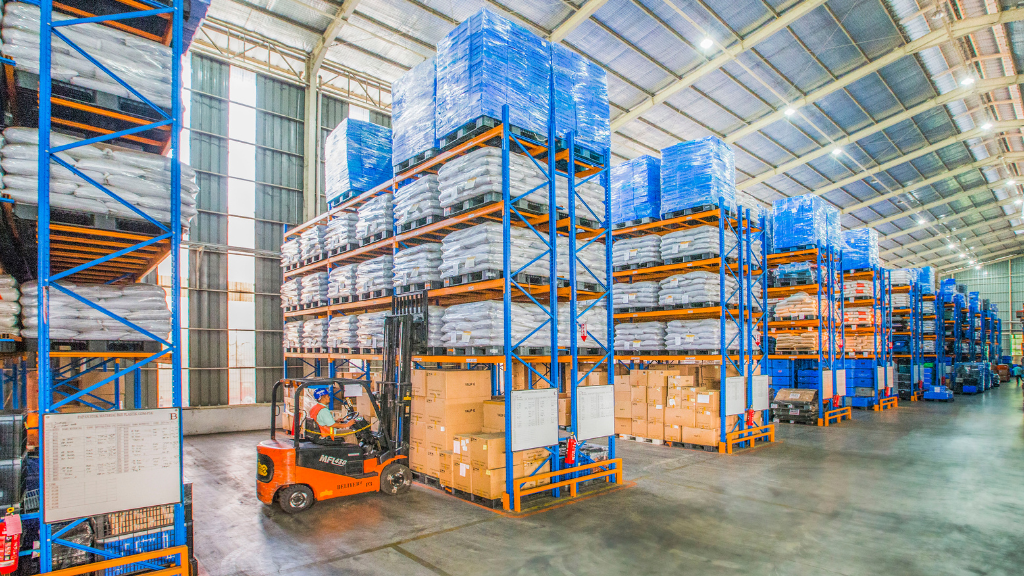
Master Warehouse Excellence with an Advanced Professional Certificate programme in Warehousing
Cost Minimisation & Value Maximisation Focus. Learn to control operational costs, improve efficiency, maximise customer value, and lead continuous improvement in warehousing.
Cost Minimisation & Value Maximisation
Warehousing is a critical cost centre and value driver in modern supply chains. This advanced certificate equips you with strategies to reduce operational costs while improving service levels and customer satisfaction.
Programme Learning Outcomes
- Analyse and control warehouse operational costs
- Improve warehouse efficiency and productivity
- Implement cost-saving logistics strategies
- Maximise customer value through warehouse operations
- Apply modern warehouse technology and systems
- Enhance supply chain integration and performance
- Lead continuous improvement initiatives in warehousing
14 Specialised Modules
Each module is coded for easy transcript recognition (e.g., APC‑WH 701). Focus: Cost Minimisation & Value Maximisation.
Introduction to Warehouse Excellence
Meaning of warehouse excellence, role in supply chains, cost vs value concept, key performance drivers, warehouse competitiveness.
Understanding Warehouse Costs
Types of warehouse costs, fixed vs variable, labour/space/equipment costs, hidden/indirect costs, cost behaviour.
Value Creation in Warehousing
Definition of value in logistics, customer service vs cost trade-off, value-added services (VAS), competitive advantage.
Warehouse Layout and Space Optimisation
Efficient layout design, space utilisation techniques, flow optimisation, storage density, reducing wasted space.
Receiving and Inbound Efficiency
Optimising receiving processes, reducing unloading delays, quality inspection, documentation accuracy, bottleneck elimination.
Storage Management and Stock Control
Storage system selection, ABC analysis, inventory accuracy, stock rotation (FIFO/FEFO), loss and damage prevention.
Order Picking and Operational Efficiency
Importance of picking cost, picking methods, travel time reduction, batch/zone picking, automation.
Dispatch and Distribution Management
Dispatch planning, loading efficiency, transport coordination, reducing lead time, on-time delivery performance.
Labour Productivity and Workforce Management
Labour cost structure, productivity measurement, performance benchmarking, workforce planning, motivation & continuous improvement.
Technology and Warehouse Automation
WMS, barcode/RFID, robotics, real‑time tracking, digital transformation benefits.
Cost Reduction Strategies
Lean warehousing principles, waste elimination (7 wastes), energy optimisation, process simplification, outsourcing vs in-house.
Risk, Safety, and Compliance
Warehouse safety systems, risk identification, equipment handling, regulatory compliance, accident prevention.
Customer Service and Supply Chain Integration
Warehouse role in customer satisfaction, SLAs, supply chain collaboration, demand‑driven warehousing, delivery reliability.
Performance Measurement and Continuous Improvement
KPIs, cost‑performance analysis, benchmarking, Kaizen approach, strategic warehouse optimisation.
Affordable Tuition with Flexible Instalments
Pay in Nigerian Naira (NGN) via bank transfer or Paystack. Application fee included. 14-module premium curriculum.
Foreign: Pay in 2‑4 parts of ₦18,185 – ₦36,370 each.
Application fee included in total.
Essential Warehouse Management Texts
Deepen your knowledge with these authoritative resources.
Warehouse Management (3rd Ed.)
Gwynne Richards – Practical guide to operations and cost control.
The Lean Warehouse
Michel Baudin – Applying lean principles to warehousing.
Managing Time and Space in the Modern Warehouse
Ernst F. Bolten – Core principles for efficiency.
Warehouse Automation
Kees de Vos – Technology and robotics implementation.
Supply Chain KPIs
Peter Bolstorff – Measuring warehouse performance.
Global Logistics and Supply Chain Management
John Mangan – Integration and customer value.
Hands‑On Warehouse Operations Projects
Apply theories through real‑world simulations and case studies.
Cost Analysis Project
Calculate total warehouse costs and identify savings opportunities.
Layout Redesign
Optimise a warehouse layout for flow and space utilisation.
Picking Simulation
Compare batch vs zone picking travel time and labour cost.
KPI Dashboard
Create a warehouse KPI dashboard (cost, productivity, service).
Technology Evaluation
Assess WMS/RFID automation ROI for a case company.
Lean Warehousing
Identify 7 wastes and propose Kaizen events.
Final Capstone Project — Warehouse Cost Reduction & Value Improvement Plan
Integrate all 14 modules into a strategic warehouse improvement plan. You will:
- Analyse a real or simulated warehouse (cost data, layout, processes)
- Calculate current cost components (labour, space, equipment, hidden costs)
- Identify waste and inefficiencies using Lean tools
- Redesign layout and picking processes to reduce travel time by 20%+
- Propose technology upgrades (WMS, RFID) with ROI calculation
- Develop a performance dashboard (KPIs for cost, service, productivity)
- Create a Kaizen implementation roadmap for continuous improvement
- Submit a professional report (2000‑3000 words) with calculations and layout diagrams
Submit your written report plus supporting materials to receive the Advanced Professional Certificate in Warehouse Management.
Your Future in Warehouse & Logistics Management
Graduates of the Advanced Certificate can pursue roles such as:
Warehouse Manager
Oversee operations, cost, and team performance.
Logistics Analyst
Optimise warehouse processes and KPIs.
WMS Implementation Lead
Deploy warehouse technology solutions.
Inventory Control Manager
Improve accuracy and reduce stock holding costs.
Lean Warehouse Consultant
Lead continuous improvement projects.
Supply Chain Coordinator
Integrate warehousing with transport and customer service.
What Our Warehouse Management Graduates Say
Join hundreds who have advanced their careers in logistics and warehouse optimisation.
Ready to Lead Warehouse Excellence?
Enrol in the Advanced Professional Certificate in Warehouse Management today – complete in just 2 weeks.