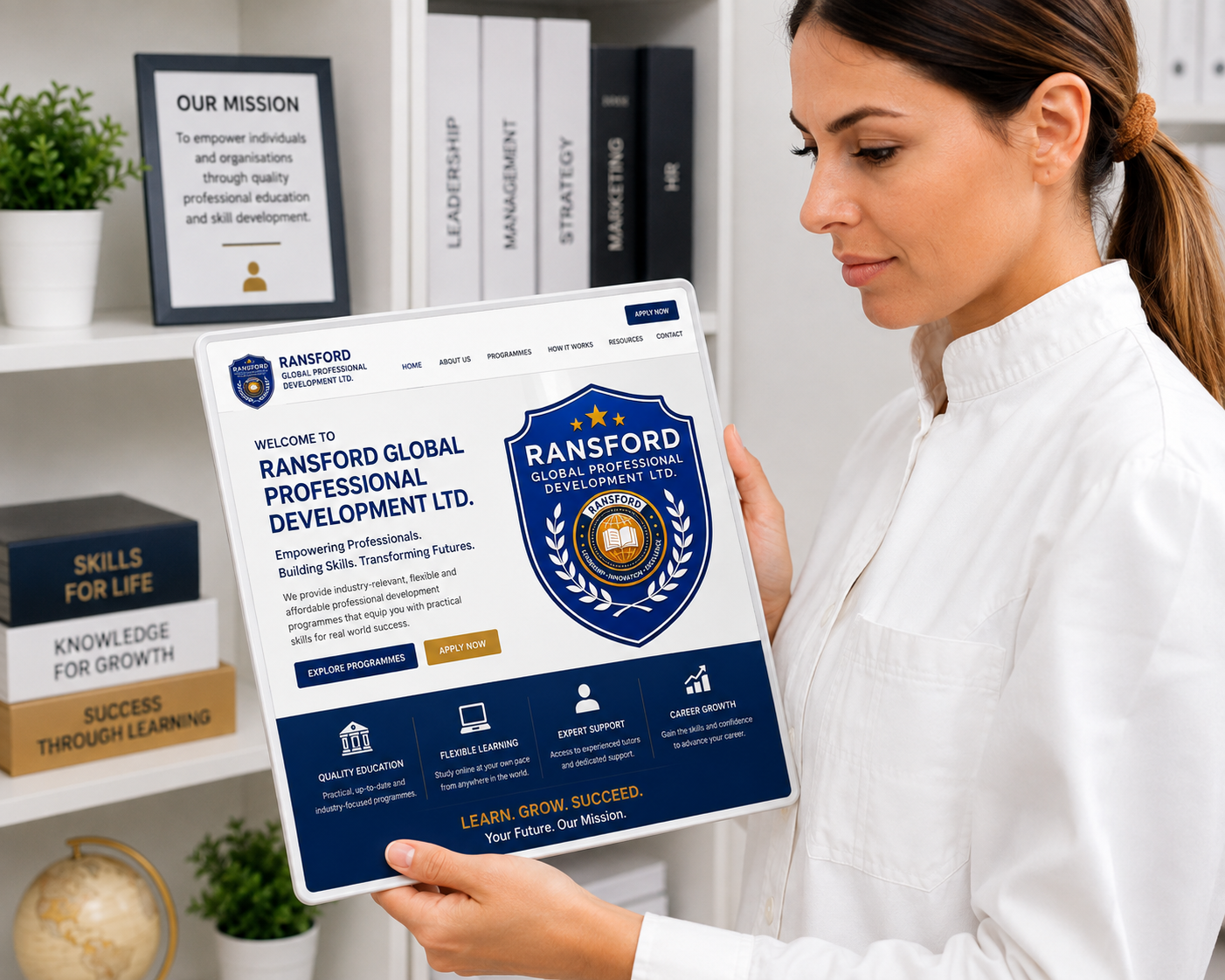
Course Information
Choose what you'd like to explore below.
Course Navigation Directory
Select your preferred professional field below to explore the available programme pathways.
💼 Business, Management & Professional Studies
📢 Marketing, Branding & Communication
💻 Technology & Digital Professional Development
🌾 Agriculture & Agribusiness
👥 Human Resources & Workplace Development
🎓 Education & Social Sciences
🏥 Healthcare & Wellness
🛡️ Criminology, Security & Legal Studies
🚚 Logistics, Procurement & Operations
🌍 Economics, Real Estate & Specialised Industries
Course Fees & Durations
2026 Professional Development Cohort
⚠️ Prices are not fixed — all fees shown are "From" starting amounts.
Admissions
Start your application or submit your credentials.
Start Your Application
Begin your admission process — choose an option below.
Upload Your Credentials
Submit your documents to complete your admission.
Payment Options
Pay by bank transfer or card — details below.
Verify a Certificate
Confirm an issued Ransford certificate or credential.
Contact Us on WhatsApp
Reach Admissions and Student Services directly.
Share this page
Spread the word with your network.
Professional Master of
Business Administration
Advance your career with a comprehensive 3–6 month, self‑paced PMBA non-degree professional development programme. 24 modules, 144 units across 8 progressive circles – from business foundations, strategy, marketing, finance, HR, operations, entrepreneurship, governance, to global business and executive strategy. Expert‑led online support. Includes professional development training documents.
🟢 Circle 1 — Foundations of Business Administration
Module 1: Foundations of Business Administration
- 1. What Is Business Administration?
- 2. The Nature and Scope of Business
- 3. Business Functions and Management
- 4. Business Organisations and Structures
- 5. The Role of the Business Administrator
- 6. The Business Management Process
Module 2: Principles of Management
- 1. Understanding Management
- 2. Planning and Organising
- 3. Staffing and Human Resources
- 4. Directing and Coordinating
- 5. Controlling Organisational Activities
- 6. Contemporary Approaches to Management
Module 3: Business Environment and Organisational Context
- 1. Understanding the Business Environment
- 2. Internal and External Business Factors
- 3. PESTLE Analysis
- 4. Industry and Market Environment
- 5. Stakeholders and Business Relationships
- 6. Managing Environmental Change
🔵 Circle 2 — Strategic Management and Business Analysis
Module 4: Strategic Management
- 1. Foundations of Strategic Management
- 2. Vision, Mission and Organisational Purpose
- 3. Strategic Goals and Objectives
- 4. Strategic Analysis
- 5. Strategy Formulation
- 6. Strategy Implementation and Evaluation
Module 5: Competitive Strategy and Advantage
- 1. Understanding Competitive Advantage
- 2. Porter's Five Forces
- 3. Cost Leadership
- 4. Differentiation Strategy
- 5. Focus and Niche Strategies
- 6. Building Sustainable Competitive Advantage
Module 6: Business Analysis and Decision-Making
- 1. Business Analysis
- 2. Problem Identification
- 3. Strategic Decision-Making
- 4. Business Intelligence
- 5. Analytical and Critical Thinking
- 6. Evidence-Based Management Decisions
🟣 Circle 3 — Marketing and Customer Management
Module 7: Marketing Management
- 1. Foundations of Marketing
- 2. Marketing Environment
- 3. Market Segmentation
- 4. Targeting and Positioning
- 5. Marketing Mix Strategy
- 6. Developing a Marketing Plan
Module 8: Strategic Brand Management
- 1. Understanding Brands and Brand Equity
- 2. Brand Identity and Positioning
- 3. Brand Differentiation
- 4. Customer-Based Brand Equity
- 5. Brand Portfolio Management
- 6. Building Sustainable Brand Value
Module 9: Customer Relationship and Experience Management
- 1. Understanding Customer Relationships
- 2. Customer Experience
- 3. Customer Satisfaction
- 4. Customer Loyalty and Retention
- 5. Customer Relationship Management
- 6. Building Customer-Centred Organisations
🟠 Circle 4 — Financial and Managerial Management
Module 10: Financial Management
- 1. Foundations of Financial Management
- 2. Financial Planning and Control
- 3. Sources of Business Finance
- 4. Investment and Financing Decisions
- 5. Working Capital Management
- 6. Financial Risk Management
Module 11: Managerial Accounting and Business Finance
- 1. Understanding Managerial Accounting
- 2. Cost Classification and Analysis
- 3. Budgeting and Budgetary Control
- 4. Break-Even and Cost-Volume-Profit Analysis
- 5. Financial Information for Managers
- 6. Using Accounting Information for Decisions
Module 12: Business Economics and Financial Decision-Making
- 1. Principles of Business Economics
- 2. Demand and Supply
- 3. Pricing Decisions
- 4. Market Structures
- 5. Economic Indicators and Business Decisions
- 6. Applying Economics to Management
🔴 Circle 5 — Human Capital and Organisational Management
Module 13: Human Resources Management
- 1. Foundations of Human Resources Management
- 2. Workforce Planning
- 3. Recruitment and Selection
- 4. Training and Development
- 5. Performance Management
- 6. Employee Retention
Module 14: Organisational Behaviour
- 1. Understanding Organisational Behaviour
- 2. Individual Behaviour
- 3. Motivation and Job Satisfaction
- 4. Groups and Teams
- 5. Organisational Culture
- 6. Managing Behaviour for Performance
Module 15: Leadership and Management
- 1. Foundations of Leadership
- 2. Leadership Styles
- 3. Situational Leadership
- 4. Transformational Leadership
- 5. Emotional Intelligence
- 6. Developing Effective Business Leaders
🟡 Circle 6 — Operations, Projects and Supply Chains
Module 16: Operations and Production Management
- 1. Foundations of Operations Management
- 2. Operations Strategy
- 3. Production Planning
- 4. Quality Management
- 5. Productivity and Process Improvement
- 6. Operations Performance Management
Module 17: Project Management
- 1. Foundations of Project Management
- 2. Project Initiation and Planning
- 3. Scope, Time and Cost Management
- 4. Risk and Quality Management
- 5. Project Leadership and Stakeholder Management
- 6. Project Monitoring, Closure and Evaluation
Module 18: Supply Chain and Procurement Management
- 1. Foundations of Supply Chain Management
- 2. Procurement Strategy
- 3. Supplier Management
- 4. Inventory Management
- 5. Logistics and Distribution
- 6. Supply Chain Risk and Resilience
🟤 Circle 7 — Entrepreneurship, Innovation and Digital Business
Module 19: Entrepreneurship and New Venture Management
- 1. Understanding Entrepreneurship
- 2. Entrepreneurial Opportunities
- 3. Business Idea Development
- 4. Business Models and Value Propositions
- 5. Financing New Ventures
- 6. Managing and Scaling a Business
Module 20: Innovation and Business Development
- 1. Strategic Innovation
- 2. Product and Service Innovation
- 3. Business Model Innovation
- 4. Design Thinking
- 5. Business Development Strategies
- 6. Managing Innovation and Growth
Module 21: Digital Business and Transformation
- 1. Digital Business Models
- 2. E-Commerce and Digital Markets
- 3. Digital Marketing
- 4. Data and Business Intelligence
- 5. Artificial Intelligence in Business
- 6. Digital Transformation Strategy
⚫ Circle 8 — Corporate Governance, Global Business and Executive Strategy
Module 22: Corporate Governance, Ethics and Risk Management
- 1. Principles of Corporate Governance
- 2. Business Ethics and Corporate Responsibility
- 3. Corporate Accountability
- 4. Enterprise Risk Management
- 5. Compliance and Internal Controls
- 6. Ethical and Responsible Decision-Making
Module 23: International Business and Global Management
- 1. Understanding International Business
- 2. Globalisation and International Markets
- 3. International Market Entry Strategies
- 4. Global Business Operations
- 5. Cross-Cultural Management
- 6. Managing Global Business Challenges
Module 24: Executive Strategy, Business Performance and Future Management
- 1. Executive Leadership and Strategic Decision-Making
- 2. Business Performance Management
- 3. Key Performance Indicators and Balanced Scorecard
- 4. Business Crisis and Resilience Management
- 5. Sustainable Business Growth
- 6. Future Trends and the Strategic Manager
💰 Programme Investment
Foreign: ₦175,685 – ₦351,370 per instalment
Foreign: ₦70,274 – ₦140,548 per instalment
Why choose the Professional Master of Business Administration?
3–6 Month Comprehensive
Complete the MBA in 3–6 months – intensive, immersive learning with flexible pacing and 360+ hours of engagement.
Self‑Paced & Expert‑Led
Study on your own schedule, with direct expert support via WhatsApp for questions, case consultations, and guidance.
Comprehensive Business Coverage
From business foundations, strategy, marketing, finance, HR, operations, entrepreneurship, governance, to global business and executive strategy – 8 circles, 24 modules, 144 units.
Strategic & Practical Frameworks
Integrates strategic management, financial analysis, marketing, operations, leadership, and digital transformation for real‑world business leadership.
Complete Training Documents
Receive handbooks, worksheets, action plans, assessment tools, and professional development resources to support your learning journey.
MBA (Non-Degree) Completion
Earn a prestigious MBA credential to elevate your career in executive leadership, business management, and strategic decision-making.
📘 Professional Development Training Documents
1. Programme Overview
- Course Handbook / Programme Guide
- Training Syllabus & Curriculum
- Programme Schedule / Calendar
2. Learning Materials
- Lecture Notes / Module Manuals
- Presentation Slides (PowerPoint)
- Reading Materials / Articles
3. Practical Application Tools
- Mastery Worksheets
- Case Study Exercises
- Simulation / Practical Tasks
4. Personal Development Tools
- Personal Action Plan
- Goal Setting Templates
- Reflection Journals / Logbooks
5. Assessment & Evaluation
- Pre‑Assessment / Diagnostic Test
- Continuous Assessment Tasks
- Practical Skills Checklists
- Final Assessment / Examination
- Competency Evaluation Rubrics
6. Workplace Readiness Tools
- Internship / Logbook (if applicable)
- Professional Code of Conduct
- Workplace Behaviour Guidelines
- Job Role Competency Framework
7. Certification & Completion
- Certificate of Completion
- Transcript or Record of Achievement
- Performance Summary Report (optional)
- Recommendation Letter (optional for top performers)
8. Communication & Support
- Instructor Contact Information Sheet
- Feedback Forms
- Participant Support Guidelines
- FAQ Document
📌 Learn → Practice → Reflect → Apply → Assess → Certify
A complete professional development programme should follow this cycle.🎯 Key Insight
A strong professional training programme is not defined by lectures alone, but by:
Worksheets (reflection) • Action plans (execution) • Assessments (measurement) • Practical tools (real‑world application)
Lead business with confidence – in just 3–6 months
This Professional MBA (Non-Degree) gives you a comprehensive grounding in business administration – from foundations, strategy, marketing, finance, HR, operations, entrepreneurship, governance, to global business and executive strategy. Across 8 circles, 24 modules, and 144 units, you'll gain the knowledge and skills to drive impact in business leadership. Enrol today and receive your complete training package.
Ransford Global Professional Development
Empowering professionals with accessible, high‑quality business education – from foundation diplomas to MBA programmes in business administration, strategic management, marketing, brand management, finance, HR, supply chain, and organisational development.