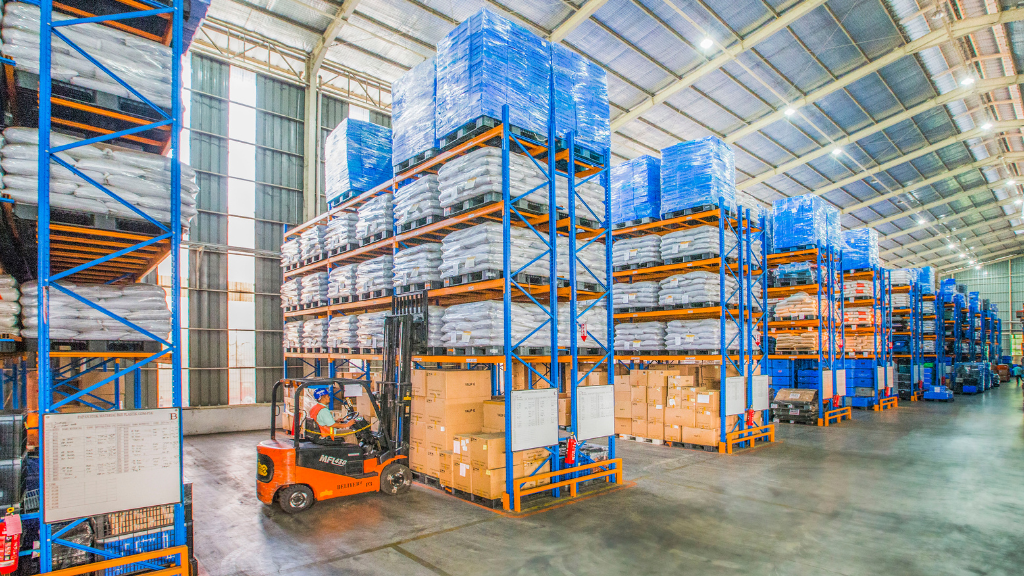
Drive Business Performance with a Professional Diploma in Supply Chain Management
Master the end‑to‑end supply chain – from demand planning, procurement, and manufacturing to warehousing, transportation, risk management, and sustainability. Globally recognised qualification.
Optimise the Flow of Goods, Data & Value
Supply chain management is the backbone of modern business. This diploma gives you the strategic and operational skills to design resilient, cost‑effective, and sustainable supply chains – from source to customer.
Programme Learning Outcomes
- Understand global supply chain structures and operations
- Develop and manage supply chain strategies aligned with business goals
- Optimize procurement, inventory, and logistics systems
- Apply digital tools (ERP, WMS, EDI) in supply chain management
- Manage risk and disruptions effectively
- Improve sustainability and efficiency in supply chains
- Analyse and improve supply chain performance using KPIs
14 Specialised Modules
Each module is coded for easy transcript recognition (e.g., PD‑SCM 701).
Introduction to Supply Chain Management
Meaning and scope, evolution, key components, SCM vs logistics, competitive advantage through supply chains.
Supply Chain Strategy and Design
Strategy development, aligning with business goals, global vs local models, make-or-buy decisions, network design.
Demand Planning and Forecasting
Forecasting methods, qualitative/quantitative, demand variability, S&OP, forecast accuracy improvement.
Procurement and Supplier Management
Procurement process, sourcing strategies, supplier selection, SRM, contract negotiation principles.
Manufacturing and Operations Management
Production planning, Lean manufacturing, JIT systems, capacity planning, quality management.
Inventory Management and Control
Inventory types, EOQ models, safety stock, turnover optimisation, inventory accuracy systems.
Warehousing and Distribution Management
Role of warehousing, DC operations, storage/handling systems, order fulfillment, efficiency strategies.
Transportation and Logistics Systems
Transportation modes, freight management, route optimisation, logistics cost management, global shipping.
Supply Chain Information Systems
Role of information, ERP systems, WMS, EDI, digital supply chain technologies.
Global Supply Chain Management
International trade, global sourcing, cross‑border regulations, cultural/economic differences, global risk.
Supply Chain Risk Management
Types of risks, identification/assessment, disruption management, resilience planning, crisis response.
Sustainability and Green Supply Chains
Environmental impact, sustainable sourcing, carbon footprint, circular supply chains, CSR.
Performance Measurement in Supply Chains
Supply chain KPIs, cost/speed/efficiency metrics, benchmarking, balanced scorecard, continuous improvement.
Future Trends in Supply Chain Management
AI in SCM, automation/robotics, blockchain, e‑commerce and digital logistics, future workforce.
Essential Supply Chain Textbooks
Deepen your knowledge with these authoritative resources.
Supply Chain Management (7th Ed.)
Sunil Chopra & Peter Meindl – Comprehensive framework.
Introduction to Supply Chain Management
Robert B. Handfield & Ernest L. Nichols – Core concepts.
Logistics & Supply Chain Management
Martin Christopher – Strategy and practice.
Global Supply Chain Management
John T. Mentzer – International operations.
Supply Chain KPIs
Peter Bolstorff – Performance measurement.
Green Supply Chain Management
Joseph Sarkis – Sustainability practices.
Hands‑On Supply Chain Projects
Apply theories through real‑world case studies and simulations.
Demand Forecasting
Apply time series models to real sales data and measure accuracy.
Supplier Scorecard
Design a supplier evaluation system using weighted criteria.
Warehouse Simulation
Optimise layout, slotting, and picking routes in a simulated DC.
Transportation Optimisation
Calculate total logistics cost and propose modal shift savings.
Risk Assessment
Identify supply chain risks and create a mitigation plan.
Carbon Footprint Report
Measure scope 1,2,3 emissions for a supply chain.
Final Capstone Project — Integrated Supply Chain Improvement Plan
Integrate all 14 modules into a strategic supply chain improvement project. You will:
- Analyse a real or simulated supply chain (demand data, supplier list, inventory, logistics network)
- Forecast demand using quantitative methods and calculate forecast error
- Conduct a supplier risk assessment and propose a strategic sourcing plan
- Calculate inventory KPIs (fill rate, turnover, safety stock) and propose EOQ improvements
- Design an optimised warehousing and transportation strategy with cost savings
- Identify top 5 supply chain risks and create a resilience plan
- Develop a sustainability roadmap (carbon reduction, circular economy)
- Create a balanced scorecard with 10 supply chain KPIs and benchmark performance
- Submit a professional report (2500‑3500 words) with data analysis and recommendations
Submit your written report plus supporting Excel models to receive the Professional Diploma in Supply Chain Management.
Your Future in Supply Chain & Logistics
Graduates of the Professional Diploma can pursue roles such as:
Supply Chain Analyst
Analyse data to optimise flows and costs.
Procurement Manager
Lead strategic sourcing and supplier relations.
Logistics Manager
Oversee warehousing and distribution.
Transportation Coordinator
Manage freight and route optimisation.
Demand Planner
Lead S&OP and forecasting processes.
Sustainability Manager
Drive green supply chain initiatives.
What Our Supply Chain Graduates Say
Join hundreds of professionals who have accelerated their careers with this diploma.
Ready to Master Supply Chain Management?
Enrol in the Professional Diploma in Supply Chain Management today – complete in just 3 months.