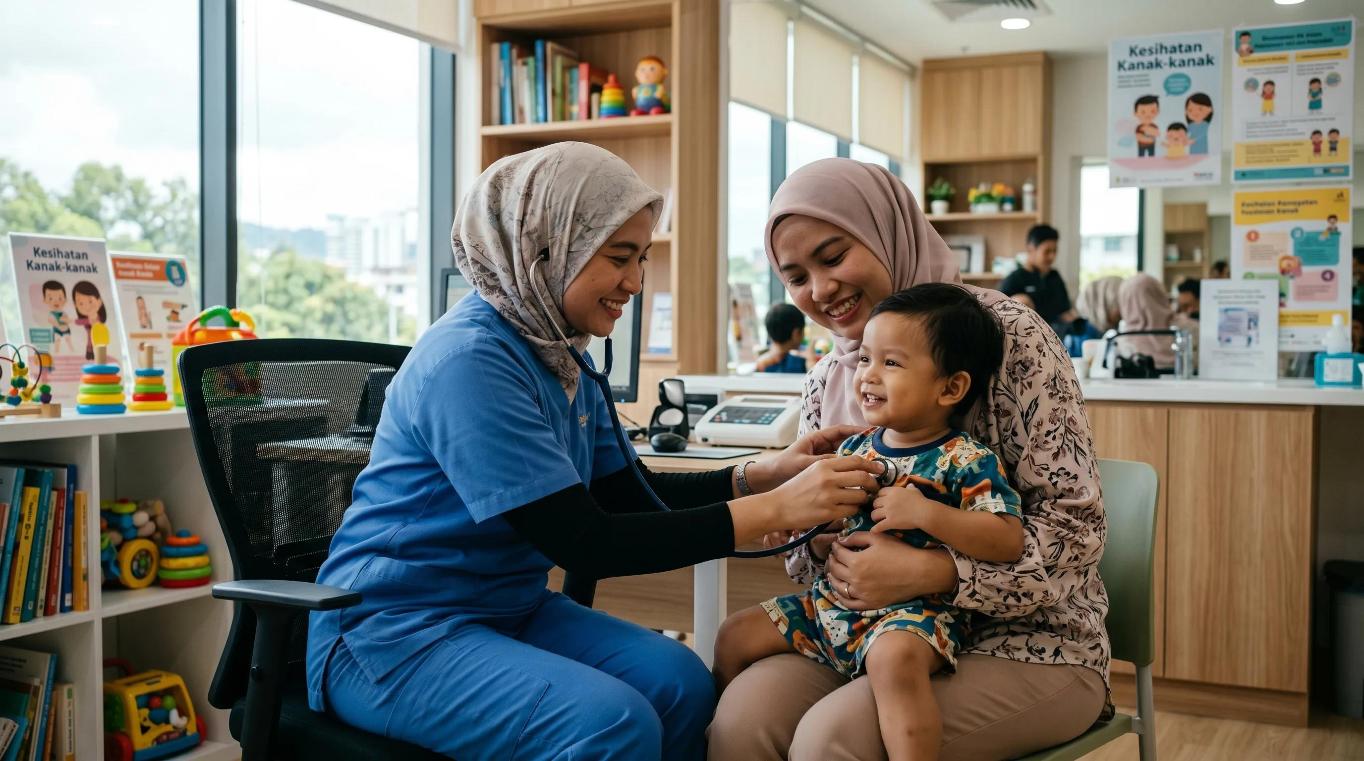
Ransford's · Professional Diploma · Nursing & Child Health
Professional Diploma in Pediatric Nursing
Deliver specialised, compassionate care to infants, children and adolescents. A practical, career-focused professional development programme for nurses and healthcare professionals who want to build expertise in growth and development, pediatric assessment, family-centred care, common childhood illnesses, neonatal care, emergencies and care coordination — whether you are entering pediatric nursing or advancing your current practice.
100% Online Instalments Available Self-Paced Mobile-Friendly Hard-copy + Digital Diploma Nigeria · Africa · Worldwide Secure Payments
About the Programme
Paediatric nursing requires specialised knowledge, compassionate care, and a comprehensive understanding of the unique health needs of children from infancy through adolescence[reference:0]. This programme equips participants with up-to-date clinical knowledge, covering growth and development, common childhood illnesses, immunisation protocols, and family-centred care principles[reference:1]. It emphasises creating a supportive and safe environment for children and their families, recognising the physical, emotional, and psychological aspects of paediatric healthcare[reference:2].
Participants explore effective communication strategies suited to children and their caregivers, learn to manage paediatric emergencies and chronic conditions with confidence, and address ethical and legal considerations in paediatric nursing[reference:3]. The curriculum draws on established paediatric nursing frameworks, including assessment of the child and family, family-centred care across developmental stages, and nursing management of common paediatric medical and surgical conditions[reference:4].
Programme Objectives
Explain the principles, practices and trends in pediatric nursing.
Understand growth and development from infancy through adolescence.
Apply family-centred care principles in pediatric settings.
Conduct pediatric assessment, including physical and developmental evaluation.
Manage common childhood illnesses and medical conditions.
Provide neonatal and infant nursing care.
Respond effectively to pediatric emergencies.
Support children with chronic illnesses and special needs.
Apply pediatric nutrition, feeding and immunisation knowledge.
Understand ethical, legal and safeguarding considerations in pediatric care.
Coordinate care across hospital, clinic and community settings.
Demonstrate professional pediatric nursing practice.
Programme Outcome
Upon completion of the Professional Diploma in Pediatric Nursing, learners will be able to explain pediatric nursing principles, apply growth and development knowledge, conduct pediatric assessments, deliver family-centred care, manage common childhood illnesses and emergencies, provide neonatal and infant care, support chronic illness and special needs, apply nutrition and immunisation knowledge, and coordinate care across settings. Graduates will be prepared for roles in pediatric nursing, child health, neonatal care, pediatric care coordination and community child health, and will receive a Professional Diploma issued by Ransford Global Professional Development Ltd.
Flexible Distance Learning
Study from your home, office or any convenient location using your smartphone, tablet or computer. All content and the certification process are delivered online via WhatsApp and Email — no daily physical classes and no need to travel for assessment.
12-Step Admission to Certification: Every candidate follows the same transparent path — apply, get admitted, pay your first instalment, receive study guides, submit your assessment, settle your balance, receive your results, and have your stamped diploma dispatched by premium courier.
Certification statement: This is a professional development qualification. It is not an academic degree or statutory professional licence. Acceptance for employment or further study is determined by the relevant employer or receiving organisation.
A structured curriculum spanning pediatric nursing foundations, growth and development, assessment, family-centred care, common childhood illnesses, neonatal and infant care, pediatric emergencies, chronic illness and special needs, nutrition and feeding, immunisation and communicable disease, ethical and legal considerations, and pediatric care coordination — with 6 units per module.
💳Pay OnlineVisa, Verve, Mastercard & Apple Pay.Pay Online →
6
Get Study Guides & Course Materials
Access Granted
Upon confirmation of initial payment, you will receive full access to study guides and course materials for all twelve modules, delivered digitally via email.
7
Receive Assessment Questions
Get Ready
After reviewing the materials, you will receive assessment questions by email with clear instructions, marking criteria and submission deadlines.
8
Complete Assessment & Send to Ransford
Submit
Complete your assessment and submit it via email to the designated address. You will receive an acknowledgment of receipt, and our team will evaluate your work against the shared criteria.
Once your assessment is evaluated and full tuition confirmed, you will receive your official Performance Statement of Results by email, including grades and feedback.
📊 This document serves as your professional record.
11
Send Your Address for Diploma Delivery
Final Step
To receive your hard-copy diploma, send your full delivery address to Ransford Global, including a valid phone number for courier contact. International delivery is available.
Ransford Global prepares your official diploma, stamps and seals it, and dispatches it via premium courier with tracking information shared with you. A digital copy is also sent for your records.
🎉 Congratulations! You have successfully completed the programme and now hold a professional diploma in pediatric nursing.
Start Your Application Today
Build the specialised knowledge and practical skills to deliver compassionate, competent pediatric nursing care. Simple 12-step process — we guide you every step of the way.
After payment, send receipt to WhatsApp +234 901 599 2500.
Open for enrolment — study from anywhere
Complete training documents & templates included
Verifiable Professional Diploma on completion
Why study with Ransford?
🧠
Practical Clinical Knowledge
Learn through real pediatric scenarios, case studies and applied exercises you can use in practice.
📱
Flexible Learning
Study at your own pace and convenience through distance learning on your phone, tablet or computer.
🚀
Specialist Development
Build the knowledge required to care for infants, children and adolescents with confidence.
🌍
Accessible Education
Study from Lagos, Abuja, Port Harcourt, Accra, Nairobi, Johannesburg, London, Dubai or anywhere in the world.
🏅
Professional Recognition
Receive a professional development diploma upon successful completion of the programme.
💼
Career Development
Strengthen competencies for pediatric nursing, child health, neonatal care and care coordination roles.
Professional Development Training Documents
Every participant receives a focused set of learning, practice and assessment documents to guide progression from curiosity to applied competence.
1. Programme Overview
Course Handbook / Programme Guide
Training Syllabus & Curriculum
Programme Schedule / Calendar
2. Learning Materials
Lecture Notes / Module Manuals (12)
Presentation Slides (PowerPoint)
Reading Materials / Case Studies
3. Practical Application Tools
Pediatric Assessment Checklists
Growth & Development Charts
Immunisation Schedule Templates
Family-Centred Care Planning Sheets
4. Personal Development Tools
Personal Action Plan
Goal Setting Templates
Reflective Journals / Logbooks
5. Assessment & Evaluation
Pre-Assessment / Diagnostic Test
Continuous Assessment Tasks
Practical Skills Checklists
Final Assessment / Examination
Competency Evaluation Rubrics
6. Workplace Readiness Tools
Professional Code of Conduct
Ethical Guidelines for Pediatric Nurses
Job Role Competency Framework
7. Certification & Completion
Professional Diploma in Pediatric Nursing
Record of Achievement
Performance Summary Report (optional)
8. Communication & Support
Instructor Contact Information Sheet
Feedback Forms
Participant Support Guidelines
FAQ Document
📌 Assess → Protect → Promote → Care → Coordinate → Support → Improve
A complete pediatric nursing cycle, from assessment and protection to care coordination and continuous improvement.
🎯 Key Insight
Strong pediatric nursing is not built on clinical tasks alone, but on: Child-centred assessment (understanding) • Family partnership (trust) • Safe, evidence-based care (competence) • Advocacy and safeguarding (protection)
Assessment and Certification
Learners complete the prescribed modules and assessments to demonstrate their understanding of pediatric nursing principles and practices.
40%
Knowledge Checks
Short assessments at the end of each of the twelve modules
30%
Practical Exercises
Assessment, growth and development, family-centred care and emergency scenarios
30%
Final Assessment
Applied pediatric nursing assessment covering all twelve modules
Upon successful completion of the programme and fulfilment of all certification requirements, learners receive a Professional Diploma in Pediatric Nursing issued by Ransford Global Professional Development Ltd. The diploma recognises professional development and demonstrated learning. It is not an academic degree or statutory professional licence.
Skills You Will Develop & Career Applications
Skills You Will Develop
Pediatric nursing principles and practice
Growth and development assessment
Family-centred care
Pediatric physical and developmental assessment
Management of common childhood illnesses
Neonatal and infant care
Pediatric emergency response
Chronic illness and special needs support
Pediatric nutrition and immunisation
Ethical, legal and safeguarding practice
Care coordination across settings
Professional pediatric nursing communication
Career Applications
Pediatric nurse in hospitals and clinics
Neonatal nurse
Child health nurse
Pediatric care coordinator
Community child health worker
School health nurse
Pediatric home care nurse
Child health programme officer
Pediatric nursing educator (with further qualifications)
Career opportunities depend on individual experience, employer requirements and relevant professional or regulatory qualifications.
Learning Method
Online / distance learning
12 structured learning modules
Practical pediatric examples and case studies
Self-paced digital learning materials
Module-based assessments
Learner guidance and support
Study using your smartphone, tablet or computer without daily physical classes.
Frequently Asked Questions
It is a 4-week, 12-module online professional diploma from Ransford Global Professional Development Ltd in Nigeria, covering foundations of pediatric nursing, growth and development, pediatric assessment, family-centred care, common childhood illnesses, neonatal and infant care, pediatric emergencies, chronic illness and special needs, nutrition and feeding, immunisation and communicable disease, ethical and legal considerations, and pediatric care coordination.
The diploma is designed to be completed in 4 weeks, with 12 structured learning modules. Study is self-paced and delivered 100% online. Diploma delivery timing depends on when you submit your assessment, settle the balance and confirm your delivery address.
The local student fee is ₦82,740 and the foreign student fee is ₦122,740, with flexible 2 to 4 interest-free instalment options. The application fee is included, and the balance is settled after you submit your assessment.
Yes. All content and the certification process are delivered 100% online via WhatsApp and Email, so learners in Lagos, Abuja, Port Harcourt, Accra, Nairobi, Johannesburg, London, Dubai and anywhere else in the world can enrol. International hard-copy diploma delivery is available with additional courier fees.
The programme covers pediatric nursing principles and the role of the pediatric nurse, growth and development from newborn to adolescent, pediatric physical and developmental assessment, family-centred care, common childhood medical and surgical conditions, neonatal resuscitation and care, pediatric emergencies, chronic illness and special needs, pediatric nutrition and feeding, immunisation and communicable disease, ethical, legal and safeguarding considerations, and care coordination across hospital, clinic and community settings.
No. This is a professional diploma that starts from the fundamentals, so registered nurses seeking pediatric specialisation, nurses in child health units, healthcare assistants, caregivers, nursing graduates, community health workers and healthcare professionals expanding into pediatric care can all enrol. You only need a phone or laptop and an internet connection.
On successful completion and fulfilment of certification requirements, you will receive a Professional Diploma in Pediatric Nursing issued by Ransford Global Professional Development Ltd, dispatched as a stamped hard copy by premium courier, with a record of achievement and a digital copy. The diploma recognises professional development and demonstrated learning and is not an academic degree or statutory professional licence.
It supports roles in pediatric nursing, neonatal nursing, child health nursing, pediatric care coordination, community child health, school health nursing, pediatric home care and child health programme support. Career opportunities depend on individual experience, employer requirements and relevant professional or regulatory qualifications.
Specialise in the Care of Children
This Professional Diploma gives you practical, applied training across 12 modules and 72 units. From growth and development and pediatric assessment to family-centred care, common illnesses, neonatal care, emergencies, chronic conditions, nutrition, immunisation, ethics and care coordination, you'll gain the knowledge to deliver safe, compassionate pediatric nursing. Enrol today and receive your complete study package.