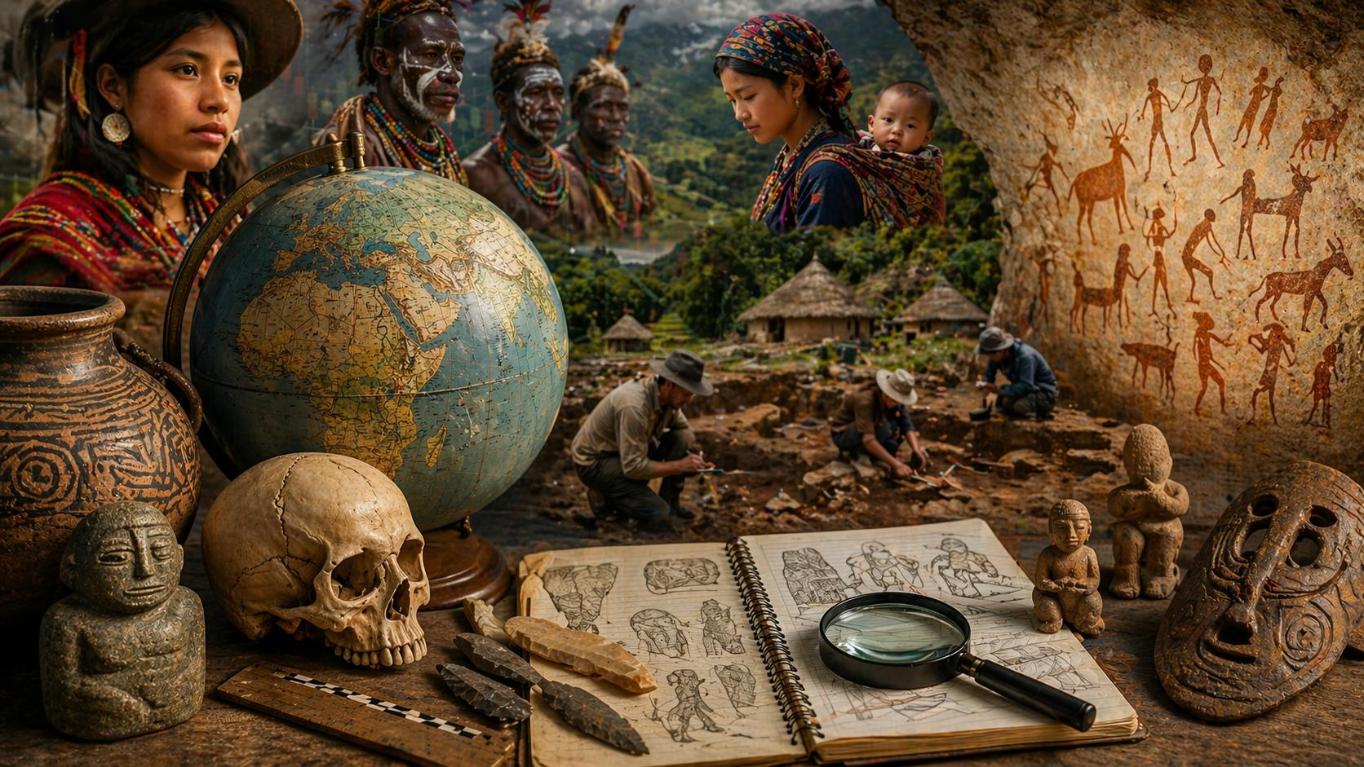
Diploma in Anthropology
A diploma for researchers, development practitioners, heritage officers, social scientists, and cultural professionals seeking comprehensive grounding in anthropological theory, ethnographic methods, culture and society, and applied anthropology.
🎯 Programme Outcome
Upon completion of the Diploma in Anthropology, learners will be equipped with comprehensive knowledge and practical skills in anthropology. Graduates will be prepared for roles as research assistants, ethnographic field officers, cultural heritage officers, community development practitioners, and social research coordinators, and will receive a verifiable Diploma issued by Ransford Global Professional Development Ltd.
100% Online Delivery
All content is delivered conveniently via WhatsApp and Email. Study at your own pace, receive module materials directly on your phone, and submit assessments through the same channels — no physical classes required.
Course Structure — 8 Modules · 48 Units
A comprehensive curriculum spanning anthropological theory, ethnographic methods, culture and society, kinship and social organisation, religion and belief, economic and political anthropology, and applied anthropology, with 6 units per module.
Foundations of Anthropology
Ethnographic Methods and Fieldwork
Culture, Society and Social Organisation
Religion, Belief and Symbolism
Economic and Political Anthropology
Language, Culture and Communication
Applied and Development Anthropology
Contemporary Anthropology and Capstone
💰 Programme Investment
Foreign: ₦23,185 – ₦46,370 each
Application fee included.
Why choose the Diploma in Anthropology?
Comprehensive Anthropological Knowledge
Develop a deep understanding of culture, society, ethnographic methods, and applied anthropology.
100% Online via WhatsApp & Email
Receive all materials directly on your phone. Study at your own pace with expert support.
8 Progressive Modules
Structured learning from anthropological foundations to fieldwork, theory, and a capstone project.
Hands‑On & Applied Focus
Learn ethnographic methods, qualitative analysis, and applied anthropology — all designed for real‑world research and practice.
Complete Training Documents
Receive handbooks, worksheets, templates, and assessment tools.
Diploma
Earn a verifiable Diploma in Anthropology to advance your career.
📘 Professional Development Training Documents
1. Programme Overview
- Diploma Course Handbook
- Training Syllabus & Curriculum
- Programme Schedule / Calendar
2. Learning Materials
- Lecture Notes / Module Manuals
- Presentation Slides (PowerPoint)
- Reading Materials / Ethnographic Case Studies
3. Practical Application Tools
- Fieldwork & Interview Guides
- Ethnographic Note-Taking Templates
- Qualitative Analysis Frameworks
- Research Project Plan Templates
4. Personal Development Tools
- Personal Action Plan
- Goal Setting Templates
- Reflective Journals / Logbooks
5. Assessment & Evaluation
- Pre‑Assessment / Diagnostic Test
- Continuous Assessment Tasks
- Practical Skills Checklists
- Final Assessment / Examination
- Competency Evaluation Rubrics
6. Workplace Readiness Tools
- Professional Code of Conduct
- Ethical Guidelines for Anthropological Research
- Job Role Competency Framework
7. Certification & Completion
- Diploma in Anthropology
- Diploma Transcript or Record of Achievement
- Performance Summary Report (optional)
- Recommendation Letter (optional for top performers)
8. Communication & Support
- Instructor Contact Information Sheet
- Feedback Forms
- Participant Support Guidelines
- FAQ Document
📌 Learn → Practice → Reflect → Apply → Assess → Certify
A complete professional development programme should follow this cycle.🎯 Key Insight
A strong professional training programme is not defined by lectures alone, but by:
Worksheets (reflection) • Action plans (execution) • Assessments (measurement) • Practical tools (real‑world application)
How You'll Be Evaluated
Continuous applied tasks + final anthropological research capstone project
Quizzes & Case Analyses
Anthropological theory, ethnographic methods, and culture scenarios
Practical Exercises
Fieldwork design, qualitative analysis, and ethnographic writing
Capstone Project
Anthropological research project and portfolio
Learning Outcomes & Career Pathways
Learning Outcomes
- Explain anthropological concepts, theories, and methods
- Design and conduct ethnographic fieldwork ethically
- Analyse culture, kinship, religion, and social organisation
- Apply qualitative data analysis and ethnographic writing
- Understand economic, political, and linguistic anthropology
- Apply anthropology to development, heritage, and social issues
- Examine globalisation, digital culture, and contemporary change
- Produce an anthropological research project
Career Opportunities
- Research assistant / ethnographic field officer
- Cultural heritage officer
- Community development practitioner
- Social research coordinator
- Museum and cultural documentation officer
- Pathway to advanced anthropology and social science programmes
Assessment & Delivery
100% online, self-paced over 4–6 weeks. Assessment via module quizzes, practical exercises, and a final anthropological research capstone. Diploma awarded.
Take the Next Step in Anthropology
This Diploma gives you practical, applied training across 8 modules and 48 units. From anthropological foundations to ethnographic methods, culture and society, religion, economics, politics, language, and applied anthropology, you'll gain the knowledge and skills to understand and work with diverse communities. Enrol today and receive your complete training package.
Ransford Global Professional Development
Empowering professionals with accessible, high‑quality education — from certificates to diplomas in anthropology, social sciences, development, heritage, business, and more.
Contact Us
Share this page
Spread the word about Ransford Global Professional Development.