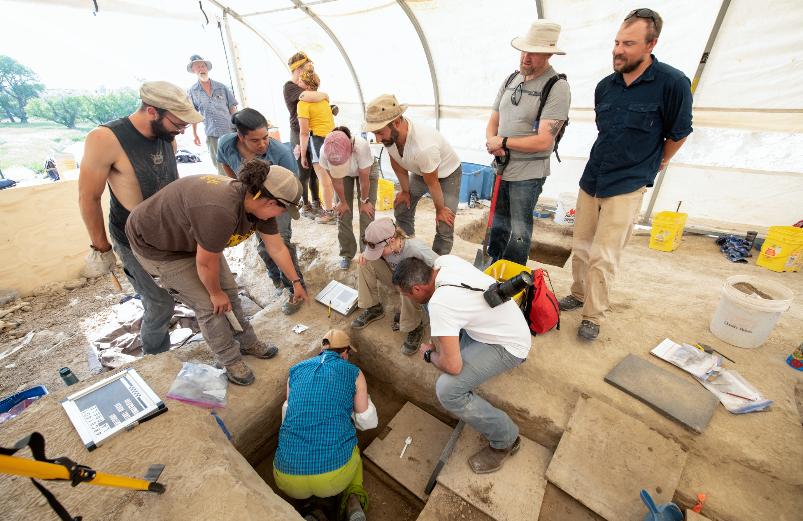
Professional Diploma in Forensic Anthropology Studies
A professional diploma for forensic technicians, medico-legal investigators, archaeology and heritage practitioners, law enforcement support staff, and human rights investigators seeking comprehensive mastery in forensic anthropology, human osteology, trauma analysis, and identification practice.
🎯 Programme Outcome
Upon completion of the Professional Diploma in Forensic Anthropology Studies, learners will be equipped with professional-level knowledge and practical skills in forensic anthropology. Graduates will be prepared for roles as forensic anthropology assistants, medico-legal technicians, forensic recovery officers, identification specialists, and human rights documentation officers, and will receive a verifiable Professional Diploma issued by Ransford Global Professional Development Ltd.
100% Online Delivery
All content is delivered conveniently via WhatsApp and Email. Study at your own pace, receive module materials directly on your phone, and submit assessments through the same channels — no physical classes required.
Course Structure — 8 Modules · 48 Units
A professional curriculum spanning forensic anthropology foundations, human osteology, forensic archaeology and recovery, biological profile estimation, trauma analysis, taphonomy, identification and medico-legal practice, and a practical capstone, with 6 units per module.
Foundations of Forensic Anthropology
Human Osteology and Skeletal Anatomy
Forensic Archaeology and Recovery
Biological Profile Estimation
Skeletal Trauma and Pathology
Taphonomy and Post-Mortem Processes
Identification, Medico-Legal Practice and Casework
Advanced Practice, Ethics and Capstone
💰 Programme Investment
Foreign: ₦30,685 – ₦61,370 each
Application fee included.
Why choose the Professional Diploma in Forensic Anthropology Studies?
Professional Forensic Skills
Develop comprehensive skills in osteology, recovery, biological profile estimation, trauma, and identification.
100% Online via WhatsApp & Email
Receive all materials directly on your phone. Study at your own pace with expert support.
8 Progressive Modules
Structured learning from forensic foundations to osteology, trauma, taphonomy, and casework.
Hands‑On & Applied Focus
Learn recovery procedures, profile estimation, trauma interpretation, and reporting — all for real‑world application.
Complete Training Documents
Receive handbooks, worksheets, templates, and assessment tools.
Professional Diploma
Earn a verifiable Professional Diploma in Forensic Anthropology Studies to advance your career.
📘 Professional Development Training Documents
1. Programme Overview
- Diploma Course Handbook
- Training Syllabus & Curriculum
- Programme Schedule / Calendar
2. Learning Materials
- Lecture Notes / Module Manuals
- Presentation Slides (PowerPoint)
- Reading Materials / Case Studies
3. Practical Application Tools
- Skeletal Inventory & Recording Templates
- Recovery & Documentation Forms
- Biological Profile & Trauma Reporting Templates
- Case Analysis Project Templates
4. Personal Development Tools
- Personal Action Plan
- Goal Setting Templates
- Reflective Journals / Logbooks
5. Assessment & Evaluation
- Pre‑Assessment / Diagnostic Test
- Continuous Assessment Tasks
- Practical Skills Checklists
- Final Assessment / Examination
- Competency Evaluation Rubrics
6. Workplace Readiness Tools
- Professional Code of Conduct
- Ethical Guidelines for Forensic Practitioners
- Job Role Competency Framework
7. Certification & Completion
- Professional Diploma in Forensic Anthropology Studies
- Diploma Transcript or Record of Achievement
- Performance Summary Report (optional)
- Recommendation Letter (optional for top performers)
8. Communication & Support
- Instructor Contact Information Sheet
- Feedback Forms
- Participant Support Guidelines
- FAQ Document
📌 Learn → Practice → Reflect → Apply → Assess → Certify
A complete professional development programme should follow this cycle.🎯 Key Insight
A strong professional training programme is not defined by lectures alone, but by:
Worksheets (reflection) • Action plans (execution) • Assessments (measurement) • Practical tools (real‑world application)
How You'll Be Evaluated
Continuous applied tasks + final forensic anthropology case study capstone
Quizzes & Case Analyses
Osteology, trauma, taphonomy, and identification scenarios
Practical Exercises
Skeletal recording, profile estimation, and recovery documentation
Capstone Project
Complete forensic anthropology case study and portfolio
Learning Outcomes & Career Pathways
Learning Outcomes
- Explain forensic anthropology principles and practice
- Identify human skeletal elements and dental anatomy
- Conduct forensic archaeological recovery and documentation
- Estimate sex, age, stature, and ancestry from skeletal remains
- Recognise and interpret skeletal trauma and pathology
- Apply taphonomic analysis to post-mortem processes
- Support identification and medico-legal reporting
- Produce a complete forensic anthropology case study
Career Opportunities
- Forensic anthropology assistant / technician
- Medico-legal and mortuary support officer
- Forensic recovery and documentation officer
- Identification and DVI support officer
- Human rights and humanitarian investigation support
- Pathway to advanced forensic and osteology programmes
Assessment & Delivery
100% online, self-paced over 2–4 weeks. Assessment via module quizzes, practical exercises, and a final forensic anthropology case study capstone. Professional Diploma awarded.
Take the Next Step in Forensic Anthropology
This Professional Diploma gives you practical, applied training across 8 modules and 48 units. From forensic foundations to osteology, recovery, biological profiling, trauma analysis, taphonomy, and casework, you'll gain the skills to support medico-legal and humanitarian investigations with competence and integrity. Enrol today and receive your complete training package.
Ransford Global Professional Development
Empowering professionals with accessible, high‑quality education — from certificates to diplomas in forensic studies, anthropology, social sciences, business, and more.
Contact Us
Share this page
Spread the word about Ransford Global Professional Development.